

ETP #72
☾
“You can't constrict one emotion without constricting them all.” -Eileen McKusick
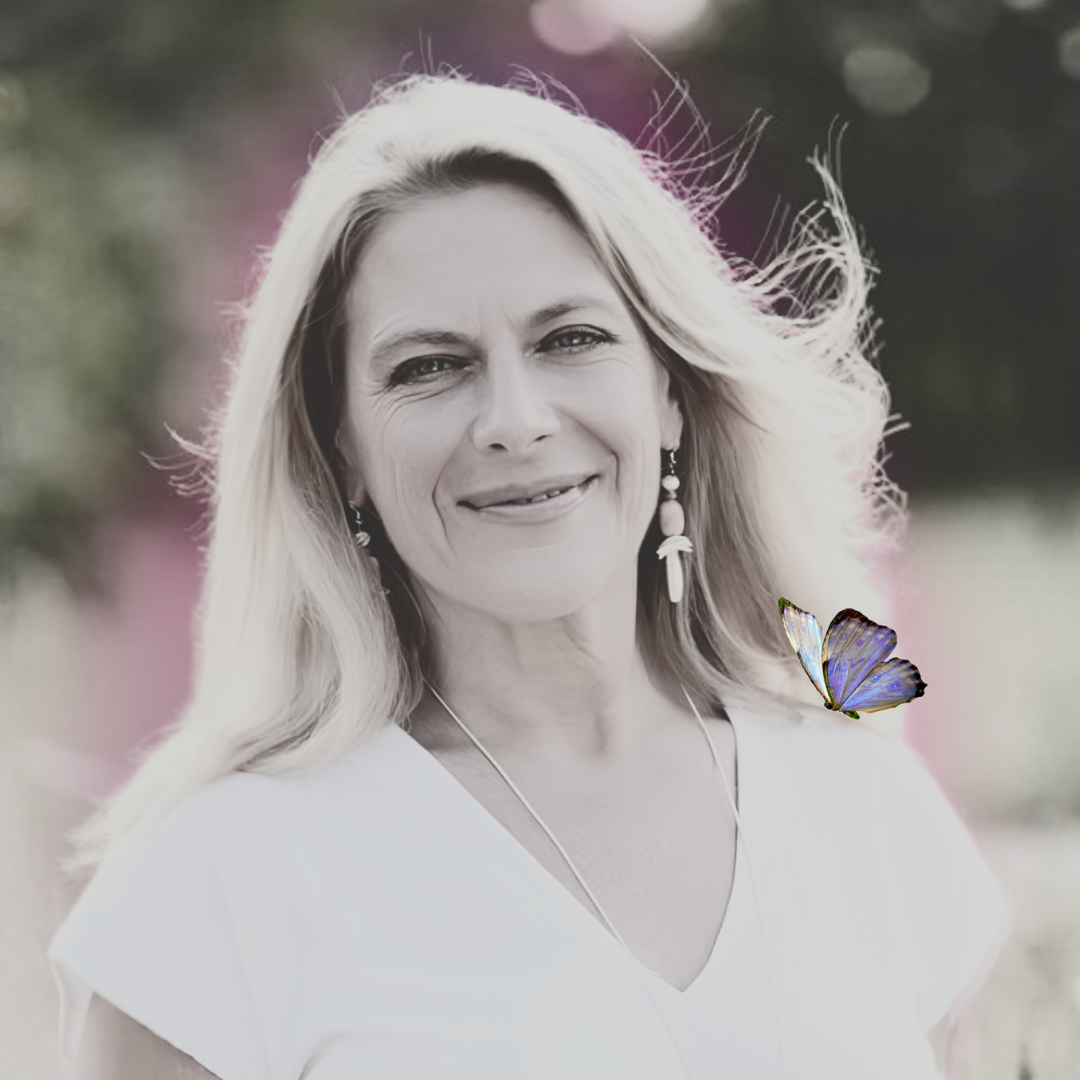
Tuning forks for healing can sound like woo, but Eileen McKusick will tell you it's physics. She created Biofield Tuning and founded the Biofield Tuning Institute, and she's been researching what sound does to the body since 1996. Her big idea is simple: what we hold back gets stuck in the body, and sound helps it move. We'd never had anyone on the podcast dive into sound like this.
Tuning Forks for Healing: What Eileen Hears in the Body
Eileen has trained more than 2,000 people in Biofield Tuning, and it all traces back to her massage table in 1996, where one client's sore shoulder changed the direction of her work. She'll tell you straight: this is physics, not woo.
She also brought her Sonic Slider, the fork she invented and keeps in her bag for jammed fingers and bee stings. I've been wanting tuning forks for the longest time, so I took notes.
Biofield Tuning and the Memories Stored Around Us
Then Eileen found something about three feet away from a client's body. I had to stop her and ask if she meant our aura. She did. She says our memories are laid down in the field around us like a timeline, and that map became Biofield Tuning. Have a pen ready, because she'll tell you where your mom shows up in there.
“It's like dropping a needle on an album and reading the vibrational record of someone's life.” -Eileen McKusick
Why Holding Back Frustration Holds Back Your Joy
Eileen says most of us were told to sit down and shut up, from school all the way to sound baths. So we hold it in. As she put it, "We hold back our authenticity, we hold back our truth, we hold back our outrageousness, we hold back our love." Her answer is to make noise, with simple sounds that each land in a different part of the body.
This is where it got personal. One of those sounds, pa, hit me so hard my whole body jolted, and I almost didn't say why. I'm so glad I did, because what Eileen spotted next was the last thing either of us expected.
How to Find Your Voice When Your Body Wants to Stay Quiet
So many people in our community feel like the singer can sing, but they can't. I get it. Singing on stage is on my bucket list, and I just found a voice coach. Eileen was further back than any of us: sweaty, knees knocking, sure she was tone deaf. Now she leads hundreds of people in song. Her way in is a half step between humming and singing, and you can try it in your car.
And wait until you hear why some Christians have told her tuning forks are of the devil.
Key Takeaways
A tuning fork gives the body a steady signal, and Eileen says the body uses it to organize its own healing.
Holding back one emotion, like frustration, tends to hold back the rest, including joy.
You don't need a trained voice to start; humming or toning a simple sound like pa is enough.
Episode Breakdown with Timestamps
03:55 — How tuning forks for healing took away a client's shoulder pain
07:11 — Eileen's portal moment, when self-help books stopped working and Biofield Tuning began
10:56 — Eileen finds old memories stored in the field around your body
14:42 — Teaching Biofield Tuning, healing herself, and why sound healing is going mainstream
21:18 — The science behind tuning forks and the Sonic Slider
27:37 — Stress, tension, breath, and letting the body release
33:55 — Why holding back frustration holds back joy, and the pa sound for your liver
41:36 — Real voices in the age of AI and the Sonic Anatomy album
48:01 — How to find your voice and unlock your body's safety valves
56:37 — Sound from the outside and the inside: tuning forks and humming every day


About Eileen McKusick
Eileen Day McKusick is a researcher, writer, inventor, practitioner, educator and speaker in therapeutic sound, the human biofield and electric health. She has studied the effects of sound on the body since 1996, originated Biofield Tuning, and founded the Biofield Tuning Institute, which carries out peer-reviewed research on the human biofield. She holds an M.A. in Integrative Education, invented the Sonic Slider, and is the author of the award-winning Tuning the Human Biofield and Electric Body, Electric Health (St. Martin's Press, 2021). She is also co-creator of the Sonic Anatomy with Isaac and Thorald Koren.
Connect with Jenner Linden
Get my Abundance Activation masterclass free: leave a review for Enter the Portal, screenshot it and email it to [email protected], and we’ll send the full training straight to your inbox.
Resources Mentioned in This Episode
Sing the Body Electric: Eileen's album of tonic songs with its 50-page Sonic Anatomy guidebook, and the Sonic Anatomy workshops
Vital Awakenings: Sonic Alchemy on Spotify: listen to the album free
Eileen's books, Tuning the Human Biofield and Electric Body, Electric Health
Sound healing reduces generalized anxiety during the pandemic: a small 2023 feasibility study of biofield-based sound healing, co-authored by Eileen (Complementary Therapies in Medicine)
Singing modulates mood, stress, cortisol, cytokine and neuropeptide activity: a 2016 study of group singing with cancer patients and carers (ecancermedicalscience)
Subscribe & Review
If you loved this episode, please take a moment to subscribe and leave a review on Apple Podcasts! Your support helps this show reach more seekers, creatives and Wild Ones who need these conversations. 🎙 Thanks for tuning in to Enter the Portal! Keep exploring, stay curious, and embrace your wild, beautiful self.
-
How tuning forks for healing took away a client's shoulder pain
Jenner: Eileen, welcome to Enter the Portal. I am really excited to have this conversation about sound. We have yet to have anyone on the podcast or even in the Wild Ones, I think, where we're really diving into the power of it and how it really supports our bodies, our healing, our growth, our voice, our expression, all of the things. Thank you for being here today.
Eileen: Yeah, my pleasure.
Jenner: I'd love to start with what your mission is. Why do you do what you do? Why is it important to share the power of sound? Just diving into that for people that don't know who you are.
Eileen: Well, I think one of the most satisfying human feelings is helping other people to feel better. It's something that really gets you on a visceral level. It's really satisfying. I think it's very fundamentally human that we're designed to help each other. I started off just trying to help myself recover from childhood trauma, and spent a lot of time and energy researching different things.
And came across sound back in 1996, vibrational medicine and the use of color, sound, music, and healing, and went down that rabbit hole and ended up with a set of tuning forks, C, D, E, F, G, A, B, C, and started playing with them. At the time, I was doing massage therapy part-time, and I just started experimenting with them with clients.
A lot of people have said to me over the years, "I have tuning forks, but I don't know what to do with them." And I didn't know what to do with them either. But I'm not afraid to experiment. I'm very much a scientist by nature, and I love experiments. I had willing guinea pigs, and I went in with them having no expectation at all, just observation.
And I remember working with an early client who was there because they had shoulder pain, and I held the tuning fork over the sore shoulder, and it sounded distorted. It sounded sharp and weird. And then I held it over his other shoulder, and it sounded normal, and we were both really amazed by that. We're like, "You hear the difference? It sounds different over here."
And so I went back to the wonky shoulder, and I just held the fork there, and after just a little while it sounded like the other one. It normalized. And he got off the table, and he rotated his shoulder, and he said, "Eileen, all of the pain is gone." And I was like, "Wow, that's really amazing." I wasn't expecting that. And then that's happened for 30 years. I'm still playing with them. I'm still experimenting. I'm still curious. I'm still learning and still being surprised by what they can do.
Jenner: I love that you just started experimenting with them. That's really beautiful. I'm curious what transformation it's created in your own life starting to use, 'cause you said you went on this journey for yourself first, which so many of us do, right? We begin because something happened within ourselves or our lives where we want something to shift, something doesn't feel right. And so I'm curious what was that opening for you that happened with the tuning forks?
Eileen's portal moment, when self-help books stopped working and Biofield Tuning began
Eileen: Well, I would say that I started my own self-help journey back in 1987 when I was 18. I started reading self-help books, like Tony Robbins and Wayne Dyer, Marianne Williamson, all those '80s teachers. And I was bulimic at the time. I was trying to get over bulimia, and really discovered that I had a passion for natural healing, for science and spirituality, for human potential. Just a lot of curiosity about it.
And I was in the self-help world for a really long time, decades. I read all the books and I still ended up in a place in my life, and this is I would say by 2010, I'd invested thousands of dollars, hundreds and hundreds of hours, and I was still overweight, in chronic pain, in poverty consciousness, fighting with my husband. I was still stuck and struggling on every front that everything I had read had promised to liberate me from.
And I think a lot of us end up in that, right? And then you're like, "What's wrong with me? What am I doing wrong? Because I've availed myself to all this information, I've tried all these different things, and I'm still stuck."
And in 2010, two things happened that really changed everything. I did the tuning forks as a hobby from 1996 to 2006, and stopped doing massage 'cause I found the tuning forks much more effective for shifting people's state. I was just playing with the forks, but I had no desire for it to be my vocation. This is in Connecticut in the '90s, and if I told people I was doing sound healing with tuning forks, they were like, "Pfft." It was just backhanded dismissal.
Jenner: Yeah. Like the nonsense of that.
Eileen: Yeah. And it wasn't anything I wanted to do as a vocation at all. But it was certainly curious and interesting and really cool as a hobby. And so I just used the tuning forks over the body, kind of like the shoulder thing. I'm like, "How does it sound over here?" I would go around the body and find places where it'd sound funny and just stay there.
And then in 2006, I made this really interesting discovery where I found a pocket of noise and distortion about three feet away from someone's body. And when I treated that, the person who I was treating, they had all of this pain and pulling in their jaw, in their neck, in their shoulder, and they'd been to all these providers and nobody could fix it. And so I'm like, "What's this out here? Why is there something going on out here?" And she called me the next day and she said, "Eileen, all of that pain and pulling is gone."
And so that sparked my curiosity, and I was like, "Well, what else is going on around the body?" So with everybody that started coming in, I started exploring the atmosphere. And using sound kind of like sonar or radar or LiDAR or ultrasound, right? All of those use sound waves to make what's invisible visible.
And so I discovered that there was this whole topography, there was this whole territory hidden in plain view that had a very specific anatomy and physiology, and a language as well. Because when the tuning forks went atonal, there was meaning in the quality of that atonalness. It's like sonic braille. It's like teaching myself to read sonic braille. And over the course of those four years, 2006 to 2010, this whole pattern emerged that I call the biofield anatomy, and it's the cornerstone of my work. It's in both my books.
Eileen finds old memories stored in the field around your body
Eileen: And in 2010, I discovered that there was a fourth state of matter called plasma. Now, I was very perplexed at the way the body interacted with the sound. It was very confusing to me. I did not have a framework for understanding what was going on or how it was working. But then I realized that the body has an electrical system, that it has electric current running through it and a magnetic field around it.
And I started to understand that this field, actually, what I was finding in these atonal areas was memories, very specific memories that were generated in very specific ages, that the field was timelined and that it was compartmentalized.
Jenner: Want to make sure I got this right. This is cool. This is so cool. Are you saying this is going on around us, like in our aura?
Eileen: Yeah.
Jenner: Right? Okay.
Eileen: So, yes. In your aura, your aura being shaped like a torus for those of you who are watching. I'm holding a toy torus here, and this is what I discovered. I discovered that there was a membrane at the outer boundary that you can feel. Everyone learns to feel it when they learn Biofield Tuning. And that defined a bubble that, just like in the Peruvian tradition or shamanic medicine, this idea that we're in a luminous egg or a light bubble, right? That's what I found.
And when we generate our information of our day, right? Everything that's happening in you is electrical. Everything you see, smell, touch, taste, feel, respond to, everything is an electrical signal. So what I found was that this was being laid down in standing waves in our magnetic field.
Which really surprised me. I was not expecting that at all, right? And there was a lot of disbelief on my part for years. And I was like, "Is this really real? Am I really... You know, is this..." But I got to the point where I could read someone like a book. It's like dropping a needle on an album and reading the vibrational record of someone's life, and it's all in this very consistent language. It's the same from person to person. Every emotion has a particular sound. Every pathology has a particular sound.
And if I was working on someone that was 60, I would find memories from gestation, birth, at the outer edge. I would find information that was generated when they were 30 about three feet away, 'cause I usually found the membrane about six feet away. Anything that's current or recent, just like hair, right? What's close to the body is new, and what's further away is old. It's the same in our field.
And I could actually modulate the way the body referenced those memories. If there was a traumatic memory and I stuck a fork in it, it would sound chaotic. But if I just held the fork there, after a little while the body would regulate it. It would tone it down or tone it up or make it more clear. And then people would feel different afterwards. Everyone pretty much says the same thing, "I feel lighter. I feel lighter."
'Cause this is like finding the emotional baggage that you're carrying around with you, literally, right? All of that sadness and grief and loss that you've experienced in the last few years, your left shoulder is so sore. There's nothing wrong with it, right? But it's all like a weight sitting in your magnetic field, and I can comb through it with a tuning fork and actually help the body to integrate and digest it, and then all of a sudden that weight isn't sitting on you anymore. It's very strange and very wonderful and very wild, right? It's wild.
Jenner: It's so wild.
Eileen: It's wild, yeah.
Jenner: I love it.
Teaching Biofield Tuning, healing herself, and why sound healing is going mainstream
Eileen: In 2010, I had a group of clients and students, clients and friends, that basically bullied me into teaching them, and I wasn't really ready to. I was actually working on a master's in education degree, and I didn't feel ready. I was like, "I don't know if this is real. I don't know if I made all this up. I don't even know if you can do..." One of my brothers said to me, he's like, "Eileen, can other people do what you do?" I was like, "I don't know. I guess we'll find out."
So I had this pilot group of students and I trained them how to read the field, work with a map, and they started getting the exact same outcomes as me, and they started working on me. My practice had all been around taking care of other people. It had never even dawned on me to try to do it on myself, 'cause part of my own trauma was taking care of others, right? As a trauma response.
And so discovering plasma and the body's electrical system, and receiving tuning started to put me in a position where I started to solve all of those problems, all the things that I had been stuck in. The chronic mid-back pain, gone. I had seven plantar warts on my left foot, gone after just a few sessions. Poverty consciousness, which is just a pattern of tension in the body, got rid of that. And I had been stuck in every lobster pot you can get into. The credit card debt, the family generational trauma. I had all of it.
And slowly but surely, getting tuned, getting my biofield tuned released those patterns of tension, those self-limiting beliefs, those stories, those blind tendencies, and made my system much more coherent and clear, helped me digest that emotional baggage and noise that I was carrying around, and dramatically changed my life.
So I was able to solve all the problems that I could not solve living in the world of solid, liquid, and gas, trying to take this supplement or try that practice or whatever. Suddenly I had a whole new toolkit and a whole new cosmological story really as well, and with the addition of these tools and this new broadened perspective, was able to solve problems. And so that's what I've been doing for years, is helping people to get unstuck.
Jenner: Yeah. That's amazing. Why isn't everybody doing this?
Eileen: 'Cause it's still woo woo.
Jenner: It still is. But you know what I find interesting? And I know you've been in the field for a really long time. I feel like when I entered, it was in 2006, and it was more about the law of attraction, right? People were focused on that, and we were all working with our mindset, and positive vibes, and all that jazz. And then it started moving into the body. It started moving into somatics, and the somatic awareness, and regulating, and all of those pieces.
And now I think it is moving into sound. I think it's moving into energetics. Not that it hasn't been there. Obviously it's been there. And even plasma, like you mentioned. I think it's starting to move out more. I don't know what you think about that, but that's just something that I've been feeling.
Eileen: Oh, definitely. Yeah, no, I've been witnessing it. As somebody who's been in it for three decades, certainly something that I've witnessed change. And I would say in the last three years, more and more people... One of the biggest things that people said to me back in the day was, "I've never heard of that." And if they never heard of it, it was clearly illegitimate.
Jenner: Totally. It must not be real.
Eileen: But now most people have heard of sound healing. They've maybe had somebody play bowls in their yoga class, or it's definitely bowls, and gongs, and sound healing music. 432, let's get on that bandwagon.
It's becoming much more prevalent, and I certainly have experienced my own world 'cause I started making my own line of tuning forks back in 2014, very high quality American-made tuning forks with frequencies based on my own research. And now you can go buy forks from India, forks from China that are in my frequencies. And that's really come up in the last few years, the cheap knock-offs have just started populating everywhere. And the ads on social media and that sort of thing.
So what was once a blue ocean for me for a really long time has definitely become the proverbial red ocean. There's just a lot more going on in it, and a lot more acceptance. I really think since COVID... I saw a change in 2012. I think 2012 was when things started to change. And then in 2021, '22, people were like, "I am so open to something other than a pharmaceutical product," right?
There is an open-mindedness that has crept in, and I rarely encounter skeptics anymore. People just logically put it together. Now, that's within a certain circle, right? You go outside of that circle, and there's a very programmed response, right? Especially among men, and I love men. I'm not saying anything negative against men. But if I were to go up to a guy with a massage gun and be like, "Hey, you got any tight muscles that you want me to work on?" They'd be like, "Massage gun, yeah, bring it on," right?
And when I go up with a tuning fork, which is the same thing, it's mechanical stimulation, it's just acoustic, a lot of them, and women too, will be like, "That's woo-woo." I'm like, "This is physics. This is a frequency generator. This is a tool."
But there's this weird mindset, not only in the mainstream mind, but even there's certain Christians who have said to me, "Tuning forks are of the devil." And I'm like, "No, no, that's pitchforks. This is a totally different kind of fork." That's just a physics tool.
Jenner: Oh my God, that's so funny. You're like, "No, that's..." Oh, boy.
The science behind tuning forks and the Sonic Slider
Jenner: You know what else I want to... I'd love to get into the science then a little bit, 'cause I know that you've done a lot of science around it, 'cause that does help people to realize this isn't made up, but it really is us working with our energy. And like you said, just because you don't know it or you can't see it doesn't mean it's not there. But you've done some research around it that helps us to really clarify it a little bit more. Will you share that with us?
Eileen: Well, I would say that since the very first day I picked up a fork, I've been doing research, right? As a clinical research. I never thought of my practice as a practice or a business. I always thought of it as research because it was always so curious. I'd hear things or discover things, or people would have certain responses, or we'd get insights. It was always just so like, wow, how is it even working, right?
So my desire to understand and explain things scientifically comes first and foremost from my own curiosity and my own love of language, and how can I describe something in a way that you can get easily, and that's useful, that's applicable, right? That's not just theoretical, or that makes dots connect. I love connecting dots.
Just some really simple things, like there was a study done, a Harvard study that was published that determined that mechanically stimulated tissue heals 2.5 times faster than non-stimulated tissue. That's pretty significant, right? Well, what is a tuning fork but mechanical stimulation?
This is my flagship fork. It's called the Sonic Slider, and it's based in the Schumann resonance, the Earth's natural resonant electromagnetic pulse that's going on in the atmosphere, which is around 7.83 hertz. You can't make a 7.83 hertz tuning fork 'cause it'd be like four feet long. The lower the frequency, the longer the fork. So this is 7.83 times 12, and I had prototypes made in seven, eight, nine, 10, 11, 12, 13, 14. I went through them all, and this one has a very distinctly pleasing vibe. Everybody who uses it is like, "Oh, that feels so good," right? It's just very relieving to the body.
I keep one of these in my bag. Lots of people do. I was at the grocery store, put my groceries in a box, put the box on the cart, jammed my finger in between, got into the car. My finger was throbbing. Blood had come up in my nail bed. There was a bruise forming. I put the Sonic Slider on it immediately, and it hurt like heck. I was like, "Ah."
Jenner: Oh my God, that sounds so painful.
Eileen: Yeah. But then just after a couple applications, the throbbing was gone, the pain was gone completely, completely. Bruise never formed. You can use it on bug bites. You can use it on bee stings. You can use it on burns. And what it does is it helps to organize your body's healing response.
Because just like when you bash your finger and you're like, "Ah," your body gets like that too. It's like, "Ah." But if you put an organized and coherent frequency on it, it focuses your healing response. All the little bits of you get over their tizzy and get focused and get right to work on sorting things out. And I think that's a big part of mechanical stimulation is just that pulse, that regular pulse, that organizing input, right?
So this is an incredible first aid tool, and we could just tie it all back to that Harvard study that when you stimulate mechanically something that's out of whack, it helps it to get in whack faster. Fairly simple.
Also a lot of times people are like, well, if your body is electric and you have an electrical system, how does sound that is a mechanical pressure wave inform your electricity, right? Okay, but your ear translates mechanical waves into electric information. Your skin, your collagen, your fascia, your bones are all piezoelectric.
This has got a long handle that you can rub on yourself. When I stimulate this, it is changing the way electricity is flowing through my body. It's affecting the gradients, the flow, the current, all of that because of the pressure waves, right? And even in the field, if I'm using a fork that you can hear in the field, it's still being translated to the body, the faint pressure wave is how it's affecting your ears, into electrical movement and information. We translate sound into electricity in our bodies.
Another physics principle is that a strong coherent signal will overtake and entrain a weak incoherent signal. So a tuning fork is a coherent signal. It's a steady rhythm, it's a steady tone. When I put a vibrating tuning fork near someone who is anxious or incoherent, that vibration is going to inform their body, their organizing intelligence, the part that heals a cut, and that sort of thing, to become more ordered, to become more coherent. It is going to inform. It is going to resonate with the body initially and then it's going to entrain the body into a more coherent expression, right? So this is all physics. It's a physics-based approach to medicine versus a chemical.
Jenner: And we know our bodies are magnificent, and they heal themselves, and basically what you're saying is you're taking this tuning fork and you're saying, "This is where the healing needs to happen."
Eileen: Yeah, and it supports the body. It supports the body in healing and ordering itself. It's a coherent input that your body's organizing intelligence uses to put itself in better order.
Stress, tension, breath, and letting the body release
Jenner: And what happens in the body exactly when we have stress and old experiences and the world, unexpressed emotions, all of these things building up? What actually happens in the body?
Eileen: Well, tension happens, right? Compression, tension. We have some kind of trauma response that causes us to contract, and we never bounce back out again, right? So we're full of all of these places where we've contracted. And I know for my particular brand of trauma, I spent most of my childhood in some kind of contracted, defended position. So I was so full, right, of all kinds of little pull-ins.
I've really observed... There's lots of different theories on what makes us sick, right? Some people are like, "It's parasites. It's this, it's that. It's toxins." What I've really observed is that it's tension. It's patterns of tension. Because the body's designed to flow, and everything's designed to function properly, but if you are constricted in any way, it's going to inhibit that flow and function.
Well, many people are really constricted in their breathing. We can go weeks without food. I have some friends on social media that go apparently months without food, and they're fine. They can go days without liquids. We can only go a few minutes without breath. And so that shows us that the primary source of what we run on is coming through our breath.
And if you have had a lot of trauma and a lot of constriction, there's a very good chance you're not breathing deeply and that you're holding your breath. I used to hold my breath a lot without even realizing it. And then you wonder why at 3:00 in the afternoon you're dead tired. It's because you just haven't been getting enough oxygen.
So what we're doing, when I comb through the field and I find an area of distortion, that has a corresponding area of tension in the physiology. And when I stay there and help the body to become self-aware, to give it an input that helps it to relax and release, whatever that pattern of holding was gets to let go, right? And whatever constricted that never bounced back has this opportunity for that bounce back, for that relief. And a lot of people say, "Wow, this is the first full breath I've taken since I can't remember when," right?
And so basically what we are doing is helping the body to relax subconscious tension that it might not even be aware that it's holding. And in doing that, that allows the body to repair itself better. So it's very simple. Even the CDC says that 85% of disease is caused by stress. Stress causes you to constrict and contract. And so this just gives you an opportunity to release and open back up.
Jenner: Yeah, and I like also that, like I do breathwork, and one of the things that I really love about breathwork, and it sounds like this is the same with sound healing, which is you don't necessarily need to know what the trauma is or where it came from or why it happened or la-da-da-da-da-da, right? It's the breath that works. It's the sound. It's the vibration that works and that does the healing.
Eileen: Yeah. Exactly. And we make it a very somatic experience for people. When I hit an area that's funky, I'll ask people, "Where do you feel that in your body?" And they'll identify it, and even people who are walking around with their head cut off from their body that don't have a lot of somatic awareness can often identify something faint. Like, "Oh, I feel that in my diaphragm," or, "I feel that in my left hip."
I just invite them to keep their awareness there, and the beautiful thing is that you don't have to intend anything because there's a conversation going on between your organizing intelligence and the fork, and you and I are just witnessing what is happening with that. I don't go in with the intent to heal you. I just go in with the intent to find where you're wonky and let your body do that process itself.
Jenner: You don't have to even believe in it 'cause you just...
Eileen: Right. Yeah.
Jenner: Yeah. I love that.
Eileen: But I will say that my biofield anatomy map that really shows the memories from when you were three were here. The ones that were related specifically to your mother are right here. That being able to actually identify something can make a big difference. So the vast majority of what I do with people I do somatically. But then if I'm in something that just isn't moving, then I'll plot it on the map, and I'll say something like, "According to the biofield anatomy map, this happened when you were 10 years old. It's in the area where the emotion of guilt and shame tends to get laid down. Does that make you think of anything?"
And they'll look at me and say something like, "I've never told anyone this, but blah, blah, blah, blah, blah. Here's this shameful experience." And then something will release and let go because it was witnessed, because it's talked about. All I have to do is listen. That's it. I'm not a therapist. I'm just giving them space to be witnessed, and then they'll get off the table and that hip pain that they came in with is gone. Right? 'Cause confession is good for the soul.
So there is something to be said in being able to identify it if necessary, and I only go there as a last resort. And I don't even have to have people talk about it, because I can say, "This is age 10, this is what's related to..." You don't have to talk about it. You can just feel into that, and then that recognition that this pain is tied to that contraction that happened in that experience is being witnessed even if the details aren't, right? And then that just lets that let go.
Jenner: Yeah. I just think it's so wild. How do we not learn this stuff so early in our lives? It's just so powerful.
Why holding back frustration holds back joy, and the pa sound for your liver
Jenner: And one of the things that you actually talk about that I think is really interesting, and I'd love to hear more about, is you talk about how suppressing frustration can also suppress joy, and passion, and playfulness. How is all of that connected?
Eileen: Well, so much of what we've been taught is suppression, right? Even Western medicine is all about suppressing symptoms. Most of us, from the time we were little, have been told to sit down and shut up. Go to school, sit down, shut up. At home, sit down, shut up. Meditate, sit down, shut up. Go to a sound bath, lie down, shut up.
And I have really seen that actually people need to stand up and make noise. We need to express, because we hold stuff in with that tension of suppression. We hold back our authenticity, we hold back our truth, we hold back our outrageousness, we hold back our love. So we end up with all of these patterns where maybe we're trying to hold back our frustration, or hold back our anger, or hold back... But you can't constrict one emotion without constricting them all. Right?
If you go numb because you're filled with so much pain from experiences that life has dealt you, there's no way that you're going to feel joy, or curiosity, or excitement...
Jenner: Or passion.
Eileen: And so much of what I do really is about expression, giving the body the opportunity to express what it's been holding onto, to tell the story, if you want to tell the story.
In addition to the tuning forks, I also do work with voice. I have two creative partners named Isaac and Thorald Koren, and we created this system called the Sonic Anatomy, which is 42 different tones that are like baby sounds, ma, pa, goo, gee, ga, wa, things like that. And they all resonate in specific parts of the body.
And so by tuning into your body and making the sound, like for example, the liver resonates with the sound pa. And if you had a father who was dangerous, unpredictable, violent... And your liver in the biofield anatomy also relates to your father. So you'll have a lot of constriction in your liver.
I was with a friend of mine in his car, and he was playing the artist Drake, who I don't listen to, and I just listened to him for a minute, and I was like, "I can't listen to this guy." And he said, "Why?" I'm like, "'Cause he's got serious daddy issues. I can hear it in his voice." He's like, "You can hear that?" I'm like, "Yeah, he's got all this tension in his liver." He's like, "He's really open about the fact that he has daddy issues." I'm like, "Yeah, it's in his voice. It's really clear to me." Right?
So if I had Drake here, I'd be like, "Okay, dude, we're going to tone some pa together, or get your voice inside your liver and start releasing that tension from the inside out." And so when you go to make that sound, if there is compression, contraction, it might come out something like pa. Right? But after a few minutes of bringing more air, bringing more space, it starts to become more resonant, pa. Right? It opens.
And so you think about doing that with every organ in your body, getting inside of it and opening, right? Because this tension is stored in our viscera. It's not just in our muscles, not just in our fascia. It's in our organs. Like so many people who have lower GI issues, the problem is not the bacteria in your lower GI. The problem is tension in your liver, gallbladder, spleen, pancreas, 'cause your parents were chaotic and crazy. And so because there's so much tension in your upper GI, it's not doing its job properly. So what's going downstream needs additional organisms to come in and help to digest it, right?
So it's a very, very different lens to look at health through. I'm not going to be like a naturopath and give you this probiotic. I'm going to sit you down and release your upper GI and help get that in better shape so that starts functioning properly, so then the lower GI is not dealing with the upstream incompetence.
Jenner: I've been having... You can't really see it, but I have all these rashes around my eyes right now, and they're red, and they're inflamed. And it's really interesting, 'cause I'm working with all these different things and trying to figure it out and what the heck is going on. Well, one of the things is it's liver, right? Your eyes are liver, and the red is liver. And there's anger, and there's that energy there.
And then the funny thing is I just went and visited my dad, and I had this before I visited my dad. But I visited my dad, and it actually started going away. And now that I'm back home, it's come back again. So I'm just like, "What? What does this all mean?" And as soon as you said pa, my whole body jolted. I was like, "Whoa, okay."
Eileen: Yeah. So, prescriptively, there's a few things that I would suggest. One is to sound pa, just out of curiosity. It's a good thing to do in the car. You just use your imagination and intention to go into your liver, and sound from your liver. And then the sound that treats the eyes is I. I, pa, I, pa, I. So you can just play with those sounds and see what you notice.
Skin stuff is almost always liver related. The first thing that I thought of was your glasses.
Jenner: Oh. Interesting. Okay. That is where it sits. That's literally where it is.
Eileen: Yeah. That was my first thought, was that somehow your glasses... If they're made of plastic, they do start to break down and lose structure, they start to disintegrate. And so the seal might have come off, and you might be being exposed to some kind of plastic that your body finds offensive.
Jenner: Oh my gosh, that's so funny too because when I was on vacation, I wasn't really wearing my glasses 'cause I don't really need them if I'm not working.
Eileen: Well, there you go, 'cause sometimes it can just be as simple as that.
Jenner: Oh my God, I'm so glad I said something.
Eileen: Yeah, yeah. That was what dropped in for me as soon as you said that, the glasses are bothering you.
Jenner: Yeah. That is interesting.
Eileen: So it isn't always your dad and your liver. It can just be something much more simple than that too.
Jenner: Oh my gosh.
Eileen: So yeah, I'd recommend a new pair of glasses, different frames.
Jenner: Yeah. It's not these actually that I have on right now. I know it's these other ones that I get from Amazon.
Eileen: Well, there you go.
Jenner: I'm like, "That's got to be what it is," 'cause it literally is the same exact shape and pattern of that. Oh my gosh, I'm totally blown away now. Okay.
Eileen: Well, I'm glad I spoke up.
Real voices in the age of AI and the Sonic Anatomy album
Jenner: Yeah. And talking about speaking up, I love that you said that about how we've been told to shut up and sit down and hold it in and the tension in, and all that. And you want people to stand up and voice. And I think that's so interesting because what we're seeing right now, at least I'm noticing this on the internet, is with all the AI, there are so many people that are saying no to the AI, and they're getting more real, real, like real, real than they have ever been before, and they're speaking up more than they've ever before. They're saying things that they've never said before, and it's actually kind of cool.
And I'm wondering if you're noticing that too, like people are done with this, and they're like, "No, I'm just going to share all the gunk and the weird," just like I did, right? Like, I got some shit going on, and just sharing it and what happens out of that is incredible.
Eileen: Right. That's something that I've really noticed for a while, because so much with my work with keeping my biofield groomed, I'm incapable of holding back. I'm incapable of being false. So I'm always real, vulnerable, authentic, right? And I've observed how people really appreciate that, that we went through this whole curated Instagram world where everyone was trying to be a particular way, and then AI and it's too polished and dead and inhuman.
And so there's a real craving for authentic expression, and what's so fun about the Sonic Anatomy is that it started off, we created what we called healing tonics, where we'd take a particular set of tones and string them together. Like I got food poisoning not that long ago, and so I created a tonic of my internal organs to sound to help to get that tone and rhythm and function back into my gut.
But then they became musical. So we just actually yesterday released an album on Spotify. We released it back in March, but now it is on Spotify and iTunes and Apple, that is songs of tones. It's everything from embodiment, just getting yourself into your body, transmuting pain. There's one called Sacred Rage that's like heavy metal. It's like, "Ah."
There's this vehicle for expressing emotion that you generally don't do, you know? And it's safe, and it doesn't have words. There's no words that you need to relate to or not relate to. There's just sounds. Like Sacred Rage is wa, which is your tailbone, ra, which is the back of your heart, ha, which is the front of your throat, and a, which is your head. And so when you go through these tones, wa, ra, ha, a, it moves that energy through your body. So what has been held can now express with zero attachment to a word, right?
So there's eight songs on the album, and each one gives you the opportunity to express a particular sentiment. And we recently did it at a festival. We did a concert, but everybody sings with us. And in the 75-minute set, we had everyone singing, dancing, laughing, crying, expressing, and all doing it together.
So you get hundreds of people making sound together, and because all of these tones come from our own agreement, you know? We'd be hanging out at a coffee shop, and we'd be like, "Let's figure out the sound for the spleen," and we'd start playing around with different sounds. And when we hit one that we all resonated with, we were like, "Okay, that's it." So it's not tied to a particular tradition, right? It's not Vedic, or it's not... It's just... And it's not religious, but at the same time, it is devotional. It's like a celebration of life itself. It's a great Sunday morning church kind of thing to get everyone expressing.
And afterwards, when people experience it, they're like, "That was so amazing. That was the most amazing thing. It made me feel so good to be able to just raw release with no..." If you're at a concert and you're singing songs, you're like, "Oh, I got to be in pitch and in tune." It doesn't matter, right? It's not about how you sound or how you look. It's about the freedom to feel and express.
And truly of all of the medicines that I've explored, this one, I think, with the voice, is the most powerful. And it helped move me from a place of trauma-induced terror of singing in front of people into recording an album and leading sing-alongs. So I think that that's a freedom so many people want to experience that's been taken away from us. Fundamentally as humans we are musical. Imagine life without music. It'd be like, what are we even doing here, right? It's so fundamental.
Jenner: What are we even doing? Well, all the indigenous cultures across the whole world, right? They know. They speak through song.
Eileen: Yeah.
Jenner: Their story is through song. Their rituals are through song.
Eileen: Yeah. Exactly. And so now in the celebrity culture we're like, "Oh, it's that celebrity who's singing, and I'm in the audience, and they're a trained musician, and I can't sing." And so we've lost our connection to our humanity through feeling like we are not at liberty to sing.
And so to be able to give people the gift of, yeah, toning is down here. That's pretty easy. We can sit around and om together. I'm not going to have a problem with that. But then ask me to sing a song, it's like, no, that's too far of a jump. I can't go from oming with you to singing with you. But these tonic songs are like a half step that's just so much easier.
And it's joyful and playful and vitalizing 'cause it gets all the things. You're making nitric oxide. You're getting more oxygen. You're vibrating yourself from the inside. You're creating more current, more flow. And there's been mad amounts of studies done on what happens in people's bodies when they sing together. If it was a drug, everyone would want it, right? Because of all of the health benefits that are conferred by doing that. It's fun to do something that's so solidly backed by science.
How to find your voice and unlock your body's safety valves
Jenner: Yeah, I love that you brought that in, the voice and the singing, and even the humming. You talk about how you can hum, and tone, and sing. And I'm wondering for... There's so many people in my community that are holding back their voice, and they feel like they can't say what they want to say or how they want to say it, or they're afraid how they're going to show up.
And it keeps us stuck in this, it's almost like you said with the singer, right? The singer can sing, but I can't. Or that person leading the community or the webinar or thing, they can teach, but I can't. And I think that comes up a lot, and I constantly want people to share more of their voice, more of their wisdom, more of their expression that they have to share with the world, which is a huge part of my work as well, and I think that's why I was so drawn to you. And so I'm curious, what would be the first step for them to really start owning their voice, coming back to themselves, reconnecting to that part?
Eileen: Well, I guess the first step is since we just put the album on Spotify, go listen to the album. It's there. Right? On our website, it's singthebodyelectric.com, it comes with a 50-page guidebook that tells you all about the Sonic Anatomy. It tells you the tones. It tells you where they resonate, right? So that's there for 22 bucks at singthebodyelectric.com. Go to Spotify or iTunes and just listen to it for free. I think the lyrics are there on Spotify. So just listen to that, and then you probably find yourself wanting to tone along.
But we have different levels of participation. Once or twice a year we do a virtual weekend workshop where we teach people these are all of the 42 different tones, these are the five different zones, these are some tonics, these are how you put together your own tonics. 'Cause it's open source, you know? You can make songs out of these if you want.
And what we find is that when people start to engage in the work, whether they do the weekend, they keep going with it, what we hear back is, "I'm speaking up more. I'm setting boundaries better. I'm opening my mouth where I didn't before." Because so much of what's holding you back and in is, when you're a kid and you went to emote, you were very often shut down. And it's very normal for kids to be noisy. And so when we're told over and over again to put a lid on it, we develop all of these physiological lids inside of ourselves.
So that when you go to try to express yourself, all these safety valves are in place. Your body is doing you a favor 'cause it's trying to keep you safe, and like, better not say anything 'cause you might get smacked or you might say something wrong and get punished. Right? So it's not your body working against you. It's survival. And it's okay.
But when you start to open these through pa, through ma, through da, through fi, you start to open all of those safety valves, then what wants to express just comes out so much easier. But you have to methodically unlock them. And this is absolutely a system that methodically unlocks them.
I was terrified to sing in front of people. I would get sweaty. I'd feel like I had hands around my throat. My knees would start knocking. I'd feel like I'm going to throw up. It was really visceral for me. And so to go in just a few years from that, and I also believed that I was tone deaf, I had a lot of noise in my signal, a lot of tension in my body, to being able to stand up in front of hundreds of people on a stage and not have even a moment of discomfort is huge. It's huge. If I can do it, guys, you can do it too. You know what I mean? I was a worst case scenario. It took me 35 years of healing to get to a place where I could be free enough to do that.
And here's the thing, the way that the world is going, right, with AI and everything like that, we're kind of being bored. And your voice is more necessary than ever. And I'm always amazed when we're in a workshop, whether it's a live one or a virtual one, and someone has the courage to get up and tone with a microphone in front of everybody. It gives me chills. It doesn't fricking matter whether they... You know what I mean? It's just about the beauty and the uniqueness of every single voice, and when those come through with courage, it's so moving, right?
So every single one of you who's listening has value, has a voice, has something to share. You do. You do, and we want to hear you. We really do. And so this is a system that's fun. It's actually fun. It's Sound Healing Made Fun 'cause it's fun. We make it fun. I think 'cause sometimes healing can be like this, mm, mm, mm, kind of slog. And this is just playful expression. It's sandboxing, but it really works, and it works on so many different levels.
Jenner: Yeah, that's so beautiful, and what a testament. I was going to ask that too, do you have any people that have been through this process and shifted something for them? But that's huge, right? Like, "I've been doing 35 years of this work, and now I'm finally on stage singing in front of people," would never thought myself to do that.
Eileen: Totally.
Jenner: And it really speaks to my heart, 'cause that's definitely one of my bucket list things is being able to sing on stage. So you're speaking right to me, Eileen.
Eileen: So fun. It's so fun. And what's so great is that it's not about me as a performer, 'cause the three of us are, we're not there to perform. We don't care what you think of... We're just here to support your voice so that we can all sing together. So it becomes this group experience where it's not about Isaac and Thorald and I in any way, shape, or form, but it's about who we all become as a group.
And so we also have a next stage in that, where we do a Sonic Anatomy guide training. And again, it's a three-day virtual workshop where we help you to feel comfortable to have the tools and techniques so that you can facilitate this for others, whether it's going into an old folks home or working with your kindergarten class or introducing it into your yoga class or however you feel motivated to help other people free their voice. So we train you to be able to do the same thing.
If you're a musician and you want to make up tonics, it's a great thing to do with kids, it's a great thing to do with old folks because it just sucks you in and you just start doing it. And it does. It makes you free. Once you open the voice, you can't take it back.
Jenner: No, it's so true. And honestly, singing is such a joy, right?
Eileen: Yeah. Our bodies are instruments. And when you start to unlock all the chambers within yourself and you start to feel like, "Oh, I can move my voice way down here, and I can move it way up here, and I can sing from my heart and I can sing from my belly," and all these different places of expression, that makes it playful and fun, right? And I think we need more of this because we're living in doom world. So it's actually kind of necessary to emote, to rejoice, to play, right?
Jenner: Well, it's kind of funny 'cause I just recently found a voice coach that I want to work with, a singing coach, and she was like, "Well, what kind of songs do you want to sing?" And I was like, "I want to sing ballads." And I'm not a big ballad person and that's what I listen to. I generally don't. But I'm like, "That's what I..." I just want to express it. I just want to go big. If we're doing this, let's go big.
Eileen: Yeah. I hear you. 'Cause it's fun.
Jenner: Yeah, it is. It's very fun.
Eileen: And it's healing. I mean, truly, truly, in so many ways.
Jenner: Yeah, that's so beautiful. Well, we're going to have all these links below so you can connect with Eileen, so that you can get this free Spotify and start there, sign up for one of her three-day virtual workshops or in-person workshops, and all the work that she's doing. This has been so incredible. Is there anything that you want to say before we close out or you want to leave everyone with?
Eileen: Well, I will say that I found the combination of tuning forks and voice to be super helpful. Sound from the outside, sound from the inside. I think we're all looking for health and longevity hacks. When you really start to understand electric health and you immerse yourself in sound... I don't take any supplements. I sleep really great. I digest everything. All the things that I used to suffer from, I don't anymore, and it's all been sound. It's all been sound.
Sound from the outside and the inside: tuning forks and humming every day
Eileen: And if you want to start with a tuning fork, I've got this one called the Sonic Slider, and this is actually great to pair with the Sonic Anatomy because, for example, the sound of the thymus is fa. And so if you put this right on the thymus, mmm, fa, I can really feel the vibration, right? So I'm pairing the inner and the outer. And so that's just such a simple place to start. And if you don't even know the Sonic Anatomy, you can just pair it with humming. Mmm. Right? You can go different places and see if you... Can I hum in my shoulder? Mmm. Okay, yeah, I can, right?
And I also think that for me, health in the way the world is so has to be a lifestyle, right? It can't be something that you're like, "I'm going to spend a half an hour on my health." So I would really encourage... I know there's a lot of people who are like, "I kind of want to get into healing, but I don't know what to do." Our Biofield Tuning training is so comprehensive. There's a lot of sound healing trainings out there now, but we've been doing this for a long time. We've got a really dialed-in program, and learning how to do Biofield Tuning is just such an amazing tool because you really do help people to get unstuck, right?
And I have a lot of people who've learned tuning and then have also learned Sonic Anatomy, and are combining them with their clients. And I'm always looking for the fastest, easiest, most elegant way to do anything, and for me, right, this combo just does it. It scratches every itch from the inside and the outside. Both as practicing with myself, but also as a provider, it is a joy to share with people as well.
Jenner: That's so beautiful, and such a testament to say, "I'm not taking any vitamins or any supplements." I mean, the world of that right now is so obnoxious where it's like there's always something for something. And to say that is huge.
Eileen: Yeah. I'm not throwing them out the window completely. If I get a little off in some way, I'll make use of plant medicine. I think that there are some things that can be helpful in short durations occasionally, just to help right you. So I don't throw them all out the window, but those are also vibrational and informational. I love dandelions. I'll have a whole plant dandelion tincture because it gives me the intelligence, the information, and the song of such a vital plant, right? So then my body is using that information, that song. Right? So it's not so much a supplement as it is vibrational and informational.
Jenner: I think plant medicine is so beautiful. I actually have some dandelion seeds I'm about to plant too, so that's so funny that you said that.
Eileen: Oh, it's awesome.
Jenner: All right. Thank you so much, Eileen. This has been incredible getting to know you more and the work that you do, and I'm excited to see what comes through for people out of listening out of this podcast. So thank you so much.
Eileen: Awesome. Yeah. Thank you, Jenner. It's been a pleasure.
