

ETP #69
☾
“Embodiment and discernment are superpowers in this time.” -Natalie MacNeil
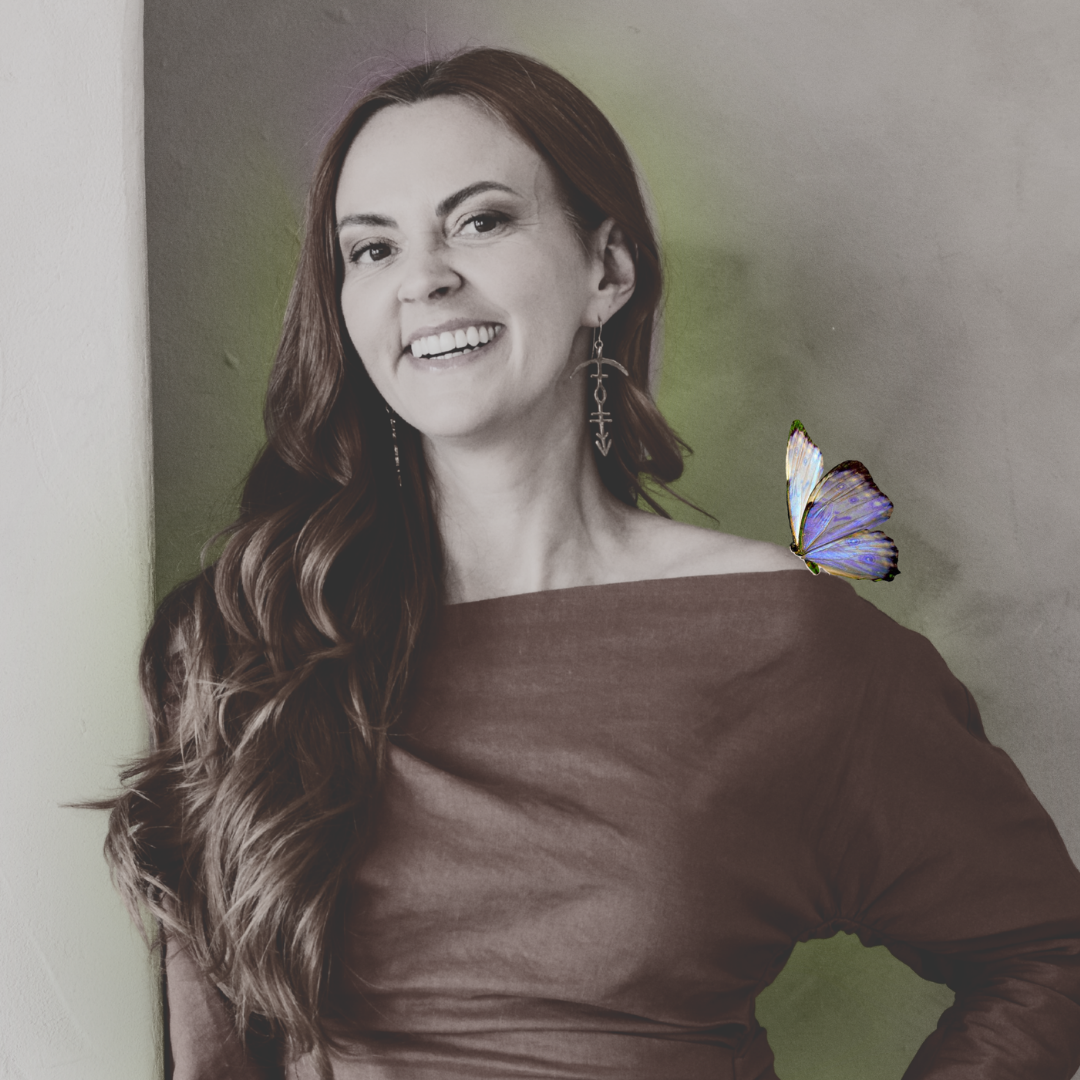
Most talk about AI for entrepreneurs stays on tools and shortcuts. With futurist Natalie MacNeil, it kept coming back to a bigger question: what it means to be human once AI can handle so much of our work.
Natalie MacNeil is an Emmy Award-winning media entrepreneur and the founder of AI Dream Team®. Before she ever taught AI, she spent years in embodiment and spiritual work, so she talks about technology and intuition in the same breath. This episode is for you if you’re curious about AI, wary of it, or a little of both.
Digital Detox and the Village We Say We Want
That question was close to the surface when we talked, because Natalie had just come back from a month almost entirely offline. Even with an app that blocks her phone in the mornings, she could feel how it “just has its claws in us.” In small French towns and a fishing village on Crete, AI felt far away, people knew their neighbors, and there was room to be bored. Natalie thinks we all need more of that, because boredom is where our best creative thinking comes from.
This part hit home for me. I've been building The Wild Ones since 2020, and so many people say they want community, but the space only works if we show up for it. Natalie shared a line she'd come across that says it well: “Everyone wants a village, but not enough people want to be a villager.”
Natalie's Portal Moment: Trusting Intuition When Success Is Complete
Natalie knows what it takes to let go of who you've been. For more than a decade, she was She Takes on the World, the business where I first found her. From the outside, it was all going amazing, yet she kept hearing a voice saying the chapter was about to close. She let it go without a plan, which was hard for a self-described super Capricorn. As she put it, “I had built this house, but I no longer lived in it.”
The year of not knowing that followed, with embodiment training at its center, shaped the way she comes to AI now.
AI for Entrepreneurs: How to Use AI in Your Business Without Losing Your Intuition
That embodiment work still guides how Natalie uses AI. Before any AI work session, she drops into meditation or breathwork and centers herself, so her intuition leads and the technology follows. Then she shares her own ideas first, out loud, and asks AI to ask her questions before it does anything.
Okay, this is where I nerd out. Natalie doesn't use AI to replace her voice. She uses it as an operating team, with roles like a marketing strategist, a money maven, and a coach for founders, all trained on a shared “business brain” with your audience, offers, values, and even your time capacity. Her starting point for using AI in your business is to give each role its own project, then add skills and connectors so it works inside the tools you already use.
“I want people to be able to operate fully in their mission, in their zone of genius, and have AI handle the rest.” -Natalie MacNeil
AI and Humanity: Staying Hopeful Without Looking Away
Being hopeful doesn't mean looking away. Natalie takes on the hard parts of AI too, from frontier models breaking out of their test environments to jobs, power grids, and data centers, and she reminds us that we are not powerless. If you're in the U.S., 5 Calls connects you with your representatives and gives you a script for asking about AI safety. For the numbers behind the data center debate, the International Energy Agency's Energy and AI report is a good place to start.
She sees AI as a mirror for the ways we've been running on default programming, and she closes with a story about Michelangelo's David that's really about becoming who you already are.
Key Takeaways
AI for entrepreneurs works best when you train it like a team, with roles and skills, not when you prompt it now and then like a tool.
A digital detox makes it easier to see how much the algorithm has shaped what you believe about yourself and the world.
Something can be successful and still be complete, and your intuition will often know before your logic does.
Episode Breakdown with Timestamps
07:41 — AI and humanity: the deeper question of who technology allows us to become
13:19 — Digital detox: reclaiming boredom, creativity and presence after a month offline
29:10 — Rebuilding local community, resilience, and real-world connection in an increasingly digital world
35:16 — Natalie's portal moment: leaving She Takes on the World, releasing an old identity, and trusting what came next
49:53 — Using AI without losing your intuition, creativity, discernment, or sovereignty
53:34 — AI for entrepreneurs: building an AI Dream Team with roles, skills and connectors
67:15 — AI safety, regulation, jobs, cybersecurity, data centers, and staying hopeful about our human future


About Natalie MacNeil
Natalie MacNeil is a futurist, Emmy Award-winning media entrepreneur, and the founder of AI Dream Team®, where she teaches values-driven founders to build ethical AI systems that expand their freedom and keep their humanity at the center of the business. An AI investor since 2017, she also writes The Future Thread newsletter. She was named one of Inc.'s "27 Women Leaders Changing the World."
Connect with Jenner Linden
Get my Abundance Activation masterclass free: leave a review for Enter the Portal, screenshot it and email it to [email protected], and we’ll send the full training straight to your inbox.
Resources Mentioned in This Episode
5 Calls, for calling your U.S. representatives about AI safety, oversight and environmental impact
Energy and AI, the International Energy Agency’s report on how much electricity AI and data centers use
More Episodes You’ll Love
Subscribe & Review
If you loved this episode, please take a moment to subscribe and leave a review on Apple Podcasts! Your support helps this show reach more seekers, creatives and Wild Ones who need these conversations. 🎙 Thanks for tuning in to Enter the Portal! Keep exploring, stay curious, and embrace your wild, beautiful self.
-
AI and humanity: why the deeper question is who technology allows us to become
Jenner: Natalie, welcome to Enter the Portal. I am so delighted to have this conversation with you around AI today. I have a little laugh 'cause I'm just like, there's so much to talk about. There's so much to talk about. But thank you for being here.
Natalie: Really so much to talk about.
Jenner: Yeah. And I love listening to you talk about it because you... And we'll talk about this a little bit too. You've been in the world of self-development. You had a whole coaching program called She Takes on the World, and then you have recently switched into AI. And I think one of the first conversations I heard from you was from Kate Northrup's podcast, and I was so delighted when I heard that conversation. I'm like, I'm sitting on the other end going, "Thank you, Natalie. Thank you for diving into AI," and then also having this really incredible self-development, spiritual, intuitive background. It was like, I'm so happy that I get to have conversation with you because there's so much here. I know that you're deeply excited about AI too, so your work is really around sovereignty and values, and keeping our humanity at the center. How do those two things live together for you now?
Natalie: Ooh, I love talking about this because as a futurist, my mission is ultimately to help people become more fully human in a world that's becoming a lot more technological, as we're in this big AI revolution. And that sounds paradoxical to so many people, especially because so much of my work in this moment—even though I do focus a lot on the future and I'm focused on other emerging technologies as well—but really because of the moment that we're in, so much of my time and energy and focus is on AI, and that's what I've been teaching about. But I actually think that the humanity and this technological revolution, those things belong together, because we are in this period where intelligence is becoming abundant and we have access to anything. Anything that we want to learn, anything that we want to know, it's all right there, and we, in these early stages of AI... Because really, where we are with AI is where the internet was in 1994. So we're just starting to ask ourselves what can this technology do and what can we produce with it? What can we automate with it? But the deeper question that I like to explore is around what it allows us to become. And what does it even mean to be human? I think that is the contemplation of our time. Because if machines can do things that we're consuming so much of our time, and now we get some of that time back... What does it mean? What does it mean for us to be having this human experience if the majority of our time isn't being spent on work, which is what most people spend the majority of their lives on? Most of our life force energy to this point in the entire history of humanity has been put towards surviving, and then we shifted through the agricultural revolution, the Industrial Revolution, into this place where what we produce is where our energy goes. And now I think we really get to sit with, and what else is there? What else is there for us to do as humans, and how do we each want to contribute to this reality that we're all in? So I see a lot of my work as actually helping people cross that threshold very consciously, and explore these deeper questions, and to sit in these contemplations that I think are going to define the future that we end up creating together.
Jenner: So beautifully said. And just my own standpoint on AI, I use it. I want more AI employees. As a business owner, and a Virgo, I'm always like—
Natalie: Oh, yeah.
Jenner: "How can we make this more proficient?" So that's where I'm at with things. And I know, of course, there's a lot of problematic, and we'll get into all of the pieces of AI, but I think it opens up this new conversation for us as humans and what does that really mean. It's just fascinating to me to be able to dive into so many... We're not bored, that's for sure. We're not bored here on Earth.
Digital detox: reclaiming boredom, creativity, and presence after a month offline
Natalie: That is very true, although I think we could benefit from being a little more bored, because that is where our best creative thinking and flow states are born from. So I think we actually need to get a little more bored.
Jenner: I agree.
Natalie: That's one thing I would put on the list of things to do as AI is taking over more of the administrative aspects of your life and business. Put at top of the to-do list, spend more time being bored.
Jenner: Yes. I agree. I agree. I think in that spaciousness, so much will be revealed.
Natalie: Put the phone down and walk away from it.
Jenner: Yes. Just for a moment.
Natalie: Even if just in the bathroom. It controls us in so many ways. I'm just coming back from a month that I spent predominantly offline. This is a ritual I've had for many years now. I try to take a full month off as a sabbatical in the summer. Every four to five years, or in between big projects or companies, I've taken longer periods of time off. Being off of my phone for a full month with only small check-ins here and there, a month is kind of the amount of time you need to start rewiring and re-patterning. And I see it so clearly. Even as someone who is very mindful of phone use, I have the Opal app that controls my phone time. It blocks me from using apps during certain hours, and won't let me check them in the morning. I set up these boundaries for myself, and still I can feel when I disconnect from it how it just has its claws in us. And I always come back online and back into it with that awareness, and there's just things that I see that are so clear. So I think we all have to be very, very mindful of our phones, of social media, and of how it really controls the mind, but also just feeds on our life force energy in ways that are not always for our highest and best path that we could be walking.
Jenner: Well, and you're a projector. I just found out you're a 3/5 projector, which... And it makes a lot of sense, because as projectors, we're taking all that information in all the time. So it's beautiful that, even though we don't know what information we're taking in, but when we have our phones and all of that in front of us. And then what I've heard about projectors that I think is really interesting is it's like what we're learning about ourselves is super helpful for everyone. So even though I'm saying projector, it's something that we all need to hear. I'm curious what it's like going offline for a month and then coming back online. What's that feeling of coming back online? Is it excitement, or is there some, "Whoa, this is weird"? What is that energy like? I'm really curious.
Natalie: Yeah. I have really been tracking this, this time in particular, because it is such an interesting cross-the-threshold experience every time I do that. And this time on my travels, it's not the case with every sabbatical that I take, but this time I was around a lot of people because we had committed to spending time with family, with my family, with my partner's family. We were at a wedding. We were at a friend's birthday in Europe. So we were just all over the place, and we were with a lot of people, and I was having a lot of conversations, and I kept meeting people along the way. And it felt, in this case, like each one of them, each conversation, I could track in my own system that there was something that was working in my system, and there was something that I was meant to learn and take away from it, and I think that's always true. With any person, everyone's a mirror. Everything that's happening is a mirror for us. But this time it just felt like it was that projector energy at work.
And I met people who had worked in tech and had completely left tech and were living in the French countryside with burner phones and had disconnected completely from technology. I talked to people who were in technology but trying to live as much as they could off grid in smaller towns and were building local communities. I was in a lot of local communities. Spent quite a bit of time in France, and in France they actually have a very dispersed population compared to other developed countries where a lot of people will live in the big cities. In France, there are still many people, a majority of the population, that's still living in towns. So I kept having that experience too. And at many points I was living small-town life for these travels. I was staying in little town squares. I was in the French countryside. I was on the island of Crete in a small town, a small fishing village in Greece. And you feel so far away from AI. People are running little markets, and there are the people who go out on the boats and catch the fish every day. AI is so far from their minds. But I was asking the question of, "What are you thinking about AI right now? Is it on your mind?" And having these deeper conversations, and I feel like each one wove together a piece for me.
And the process then of bringing all of that back into my life right now is that the weaving of communities feels like such a key thing. It's something I'm hyper-aware of. It's something I'm very committed to in my bigger-city life. Making sure that we have that community resilience, knowing our neighbors. No matter where we live, whether we're in a city, I think people in smaller towns are just better at this. Knowing your neighbors, knowing what you're going to do if you have a big power outage. There was a massive power outage in Spain and Portugal last year, and I know a lot of people who were there at the time and talked about how that experience opened them up to the ways that we need to build resilience.
And I also, because I was offline so much, and I really get to tap into those contemplations that I like to be in, like what does it even mean to be human and to live into that every single day? Since I came back, I've been more aware of sitting at my computer for too long, which I try to do less and less of. I try to work with AI through voice dictation so that I'm spending less time at my computer. My partner and I have been waking up early. We've been watching the sunrise. We've been going to play pickleball in the morning and doing morning exercise instead of at the end of the day. We've been seeing friends more, getting outside, being in nature more. So I'm already noticing these little shifts that I've made since I've come back.
How social media distorts reality, and why AI could scale misinformation and propaganda
Natalie: But the thing that I'm most aware of is how toxic social media is and how different it is from actual in-person reality. I think that the in-person world and the social media world, there's a big, big disconnect. And it's interesting to talk to people who have a perception of what my life must be like right now in Los Angeles because of what they see on social media, and how day-to-day life is, and people describe it as being really chaotic and really violent, and have all of these perceptions of where I live, which is always fascinating to see. And then even just around how people show up and are in the world, it's so different on social media versus reality. And I think that for where I see us being able to get to in the future, and for those of us who know that we are here to create a different paradigm on the planet, I really think one of the first steps to making that a reality is that we need to understand how the algorithm has completely shaped our minds, our relationships, our beliefs about ourselves and about the world. I see that as a really critical first step that we need to take so that we can create a more beautiful world. So sorry, that's a really long answer. It's the first time I've really stopped to reflect since I've been back on the things that I was noticing while I was away, and then what has been shifting as I've been back. So thank you for the question.
Jenner: Well, it throws me off 'cause now I have five more questions that I want to ask about that. And I'm really happy that you took the time to really drop into yourself and answer that, 'cause that is so potent. There's so much magic in what you just said, and I think it's so true. What we're seeing online is not even close to what is happening in real life for a lot of us. I used to live in a major city, and I would get it all the time from my family, and they'd be like, "Oh, I don't know how you live there because this, that, and the other thing," and I'm like, I don't experience that.
Natalie: Yeah.
Jenner: I don't experience that in the city. I experience a lot of people being amazing. It was just, yeah, different perspectives. But when you go online, it's always the hooks and the sensationalize and what's the—
Natalie: That's right.
Jenner: How am I going to edit this so it's like do, do, do, do, do.
Natalie: That's right. And I think the other thing... It was interesting talking to the people who had worked in tech, and it wasn't just one person. I ended up meeting six people who were living in the French countryside who all had the same story.
Jenner: Okay, that sounds dreamy to me. I like the idea of unplugging and living in the countryside. I would not be mad at that.
Natalie: Yeah, they intentionally chose a very... They said life is so different compared to how it was when they were working in tech and living in a big city. Life is so radically different. And the other thing, I was having this conversation with two of them, is I don't think everybody understands the powers that do control the algorithm and our experience of each other through social media, because it's not just the tech companies. It's the bad actors who capitalize on the technology. We have documented so many cases of foreign countries that are using the algorithm to create division in certain countries, especially in the United States, and to interfere with elections, and to create further polarization and more chaos in the country as a way of dividing, and as a way of reducing the power of the United States. That's just one example. This is happening in countries all over the world. I'm Canadian. I live in the US, but it's happening in Canada as well. There are foreign countries that are known to be acting with fake accounts that spread misinformation and propaganda that are meant to divide people, and meant to plant beliefs in people's minds that serve their interests. And these are things that we really need to be aware of, because it's only going to get more intense with AI. AI allows you to do all of that, but on a much larger scale.
So if you look at the Russian interference in the US elections, going back to, it was the period from 2015 to 2017, where you can go and you can actually see all the ads, you can see all the accounts that were created. Now imagine, this is a decade later. A decade later with AI. You can do that on a scale that is so beyond the scale that that campaign was run at back then. So let's all be really mindful of that, and not from a... I don't say this to fearmonger at all, because that's also not who I am. I just think if we have the awareness of these things, it's less likely to hook us in, so that we can be really clear in ourselves and in our own missions, and to do what we came here to do without getting distracted by all that other energy, and by the chaos, and by the noise, and by those darker forces and energies that are at work. We're all here for something different, and we need to hold that hope and move towards that, and I think part of it is disconnecting from some of these... can lead to a fear spiral, or ways that we get controlled through media and social media.
What small towns think about AI, and how to rebuild local community and resilience
Jenner: Well, it's such an incredible topic that you bring up. And you had mentioned that you asked all these small shop owners and small-town people what they think about AI, and I'm really curious what people that are not in our industry, who are always online, are saying about it. I was wondering if you could share some of your findings from that.
Natalie: Yeah, the general response was not concerned at all. Most people... it was so far from their daily reality. But you have to remember that when you're in a small town, I was in a town with 200 people, and I was in a fishing village with 600 people. People are so embedded in their local community. Many people have local businesses, right? There's the person that sells the milk, and there are the shop owners, and there are the small restaurants, and there are all these really small businesses. What was fascinating about the people I met who were the expats living in these areas is that they had gone and they had started very different businesses from where they had been and from the jobs that they came to. So there's a lot of community, small-scale businesses that end up getting built there.
And so most people aren't very concerned, and I think they're not very concerned because, one, they're not watching the news. They're not getting all the news. So they're like, "Oh, yeah, AI is this thing, and there are some parts of it that are scary," but they're not in the news cycle, or they're not on social media and in the spiral that a lot of us will end up in if we consume too much media, because we're absorbing all the news. So they're just living a very different life, and they're so focused on day to day what's happening in the community, and they're not so focused, from my experience, on the farther-out future. They're more focused about what am I doing today? This is the day that I have. There are things I'm going to do today. I don't even know what I'm doing next week, let alone next year. There's a lot less long-term planning, and there's more presence for what's happening now.
Jenner: I love that you say this, because I think the first place that my mind goes to is, oh, that would be so nice. But then I think, I can create that. We can create that right now in our communities and in our lives. We don't have to be online all the time. We don't have to be in the algorithm. We can connect with our neighbors. We can slow down. We can have moments away from the phone, and the news, and the things. So we can learn so much from these little villages, and how can we create that within our own lives, right?
Natalie: Absolutely. And I feel like it's different depending on where you live, what kind of city that you're in, but I would start with your own neighbors. Do you know your own neighbors? Here in LA, a lot of people don't know their own neighbors. A lot of people... I grew up in a medium-sized city in Canada, and you could go next door to any of your neighbors, and you could ask them for bread or eggs or to borrow something, or to watch the dog for an hour or watch the kids for an hour, or keep an eye on something. That's just how I grew up, and I don't see that a lot in... I've lived in LA and also in New York in the US, and I definitely haven't seen it as much. But I think we all need to do that.
What I did see happen in LA during the fires in January 2025, I really saw people come together. But I also saw what happens when people don't know their neighbors, and they don't know what to do, and they don't know, when power is out or there's an emergency. They don't know the people around them, and so that creates this fear or panic of, what do I do? Whereas immediately with the people around me, there was resource sharing. There was, "Does anyone need water? Here's a generator." I live in a small community where people do that, and I also saw beautiful things happen from that particular experience, too, like this gift economy that formed, where people were like, "I've got this. You can just come and get it." Including businesses that were like, "Hey, the store's open, and if you've been affected by the fires, come in and take whatever you need." And I feel like those kinds of things I would love to see more of in the world.
And we're getting to a place with AI where the cost of a lot of things can potentially be driven way, way down. That is a reality. The value of money could actually completely end up shifting because of AI. But I think these things, like knowing where to get your food and building that local resilience, is really, really critical for where we're going. So I'm all in on local communities for where we're going. And you can start it, like you said. You can start that today. It's possible for all of us to do more of that. A lot of people can live with a lot less than they think they can when they start operating in a very communal way, and it's something I see a lot of in these smaller towns. I saw it in smaller towns in Canada. I see it in these smaller towns that I've spent time in in Europe. People's living costs don't end up being so high because of the way that they're living. These things interest me so much. While I work in tech, these are the things that I just love learning more about as I look towards the future.
Jenner: Well, it's a great topic, because I know a lot of people in my community feel the same, and they want to dive more down that road of understanding that, and how to create more community.
Natalie: I do believe that there is a deeper reason and a deeper purpose and a deeper energy at work in people's desire and longing for community. For community, for living in a different way. I really think we have to highlight that, put a pin in it, and pay attention to it.
Jenner: There's a lot of people that are upset about AI, but I think there's a lot of things that are coming out of it, of us realizing how we actually want to live and who we actually want to be. So there's so much that comes through out of what's happening with AI right now. And really come back to what that community is for you and what that looks like, and how we have to be the ones that create it, right? We can't just expect someone—
Natalie: And show up for it. Yeah. I actually saw a quote. I don't know who said this, but someone said, "Everyone wants a village, but not enough people want to be a villager."
Jenner: Yes.
Natalie: And I think that's another part of it. It's our own embodiment. It's our own way of being. We need to look at the ways that we operate from more of that individualistic mindset and embodiment, and choose to start to shift that, and that's some deep work.
Jenner: It is. It's really interesting 'cause I feel like we've come out of this era of I'm healing for myself, and I'm healing, and I'm healing, and then there's also a lot of individualism with the internet and with COVID that happened, and there's a lot of those pieces in there that got built into our society, and now it's time to unhook from them, essentially.
Natalie: Yes.
Jenner: And I notice it with myself with building The Wild Ones, an online community, since 2020. So many people say they want community, and yet we have over 1,500 people in there, but then there's only 300 active with each week, where it's like, "Did you want community?" Yeah, I created it. The space is there. It's available. So it's really stepping out of our own way really and saying, "Yeah, I do want that." And what's available when we start sharing our voice, or asking for support, or asking more questions, or sharing our wisdom and what we've been through, and it just creates such a beautiful place to be able to grow and learn from.
Natalie's portal moment: leaving She Takes on the World, unraveling an old identity, and following intuition into AI
Jenner: I want to talk about your portal moment, because although you are deeply immersed into AI right now, you walked away from She Takes on the World, which was a coaching business. It was successful. It was growing. This is actually how I found you and knew about you. I think it must've been back in 2017, I'm guessing, maybe '16. I'm not quite sure. But that was a huge shift, a huge shift from this incredible course and everything you've been teaching there to shift into AI. Will you take us on that journey with you? What was that moment when you're like, "I have something else inside of me that I want to share. It's time to let this go," and what that was like for you?
Natalie: So while I was building my first company, I decided to share some of the experiences I was having as a young woman entrepreneur building this media business. And I started She Takes on the World as just a blog, sharing about my experiences as an entrepreneur, and it grew far beyond anything that I could have imagined. It became one of the largest blogs in the world for women entrepreneurs. There was, like you said, the consulting component. There was education. There was the blog. There were multiple contributors on it. There were live events. There were chapters all over the world. It became a whole ecosystem, really. And for more than a decade, it was also really intertwined with my identity. So I would go places and people would be like, "Oh, you're She Takes on the World." I was She Takes on the World.
And I built it at a very particular moment in my life. And not just a particular moment in my life, but I would also say it was built during a very particular moment culturally. It was more this era of hustle, of building, of the girl boss. I think girl boss maybe came just after She Takes on the World, actually. And I knew how to hustle, and I wanted to build things, and I was excited to achieve things, and I just kept doing more and more and more and more until it got to the point where I just kept hearing this voice saying, "This chapter is very soon going to be complete." And it was strange to me because it also felt like things weren't really breaking. As I felt the limitations of my own capacity, I did things like I stopped running the global chapters, and I stopped having contributors on the blog. It ended up being something that just I was writing again. So I made a lot of changes along the way, but things were, from the outside, all going amazing. And there was nothing major that was wrong, and yet I kept hearing this voice saying that the chapter was going to be closing.
So I ignored it for a little while. And then, when you ignore something, the signs will get louder and louder. So I remember one of those things being I experienced a hack of She Takes on the World, and it was the most annoying hack for us to deal with. Everything was compromised. We had to rebuild huge parts of the site, and it just felt like the first big wake-up call, where I had to hire all these experts to come in to fix the situation, which was so extensive. And I was like, "All right. Interesting." And about a month after that, I had another experience that came up, which was just a stressful circumstance, where I'm like, "Okay. Okay, I'm listening."
And what I started to sit with is, well, who would I even be without this? Who would I be without this? Who am I without this? What if I just let it all go? Then who even am I? Because so much of my time and energy goes into this. And what I eventually realized as I was in those deeper contemplations is that I had built this house, but I no longer lived in it. My energy was already going elsewhere. And I think there's this... I've actually been through this with a house as well that I've outgrown, where I'm like, "I'm just going to refurnish it, and I'm going to change some things in the house. Let me redo the bedroom, and we'll see how it feels." But when something's complete, sometimes it's just complete.
And I think that closing the chapter required me to trust this inner knowing that I really could not justify in my mind at that point. And I also didn't have a plan. I was such a planner. I'm a Capricorn. I have five placements in Capricorn, including my sun.
Jenner: I knew you were a Capricorn. I was like, "She's Capricorn."
Natalie: I'm a super Capricorn. So I'm like, "Okay, if I'm walking away from this, what am I doing next, and what's my five-year plan now?" I always had these long-term plans, and I just kept getting the guidance when I would sit in meditation that I needed to just let it go and be in the space of it. And that was really uncomfortable for me. But I think what allowed... It allowed me to unravel the identity that I had built for myself, the way that I was showing up. As one small example, I had all these amazing women mentors, women who were on the Fortune 100 lists, some of the biggest women leaders and executives in the world. And I absorbed a lot of how other people do things at a very young age, and those things didn't always feel true to me, which makes a lot of sense now, especially knowing I'm a projector and understanding my energy and what feels natural and true for me.
I was also told things like women have to wear makeup in order to get ahead. When She Takes on the World started growing and I was doing more interviews and I was speaking on stages, it's like you have to have a stylist. You have to make sure your hair and makeup is done. You have to dress in this way. And I started to take all that on, and because I was young, I also felt like everyone else knows better than me. I'm still a baby entrepreneur. Everyone else knows better than me. And I was outsourcing my power in a lot of ways, and that's the part that needed to be completely deconstructed. And I really made myself this promise that I would rebuild everything in the future very differently. Now I wear what I want. If I'm going on an interview, I wear what I want. You know what? Sometimes I don't have my makeup done.
Jenner: Yep.
Natalie: And I don't like wearing heavy makeup. And you know what? Maybe I'm here to do it differently and to show that you can do it differently, and that you don't have to follow those rules. I still see these videos on Instagram of people being like, "Women have to wear makeup to be successful. Those things are correlated." And I'm like, you know what? Yeah, prove it. If that's what it's going to take, if my wearing makeup is required when I don't want to do it, I'm here to do something different. I'm not here to follow everyone else. I'm not here to follow every rule, every data point. I have to be true to me.
And from that moment on, after I went through that portal, I was so true to myself in everything that I've done since then. Everything has been about what I intuitively feel and know to be true, and what I feel called to moment to moment. If I'm not called to it, I'm not going to do it. And I've really learned when to let intuition eclipse what feels logical. I learned that something can be successful and still be complete. And I've learned to trust the mystery and the unfolding of it all, because we can't know where we're going to end up. Sometimes intuition asks you to leave the known before you actually get the map for what's next, and it all makes sense in hindsight, but it does not make sense at the time. So learning to ride those waves.
Jenner: So was there a moment when you let it go, when you let She Takes on the World go, and you didn't know what was next? Or as you were letting it go, did you know that AI was going to be your next baby?
Natalie: Well, AI, so this is interesting. I started investing in AI back in 2016 and 2017. So that was actually before She Takes on the World was fully gone and offline. But where we are today still felt quite far away. So I love technology and I love tracking what's coming. I think I've always been a futurist since I was a kid. I imagined the future. I connected to my future self as a child. I could see... I've always had visions from a very young age, and I could see what was coming. So that allowed me to build the companies that I've built. I had built a company in media. We did some of the world's first 360-degree creative projects. And I've always just been an innovator in that sense. But I started to see that as more of my deeper gift when I was in the space. And I was probably in that spaciousness for about a year, about a full year of not really knowing what was next.
I ended up doing an ICF-accredited embodied coaching certification in that time as well. I've had a very deep spiritual journey. I've trained in many modalities. I've worked with a lot of teachers. So that was something that I was doing. But what's come online for me over the last four years is that the future, and my ability to see the future and feel the future and track the data points, that's actually what I'm here for. It's a deeper gift that has come online. So there was space, there was a lot of space. There was also working on new things, and I think it was the AI moment. So I was using AI in 2022. There was a big shift in AI around 2018. There were some big breakthroughs. Still, it was very technical. We didn't have that interface that made it accessible. It was similar with the internet. Until we had a way to navigate the internet easily, it wasn't in the zeitgeist. So that ChatGPT moment came, and I had already been using AI. And so I dove in right away, and I was able to very quickly see certain patterns, and I got really into it, and then I started teaching it shortly after that from this place of embodiment and ethics, and looking at what was possible while also bringing our full humanness to it and not outsourcing that.
Jenner: I resonate with the part of your story where you did your embodiment certification and then some different things started coming through for you. I felt the same when I did my breathwork certification, and there's something about when you're getting deep into the body like that, of what it releases and what moves through you, and just that deeper connection with ourselves. And I think that's such an important thing, that I am so happy that so many more people are coming online with that, and we're getting more connected and being able to drop in our bodies a lot differently. I think that's really incredible. I think all to prepare us. But I heard that in your story.
Natalie: Yeah. I think all to prepare us for these times. And what that gave me, looking back on it now, is because I had trained in so many modalities over the years, like I did emotional freedom technique and breathwork quite a long time ago, when not many people were in that space. I think I did my EFT training in 2013, 13 years ago. And creating the ICF-accredited certification that brought in these modalities to a professional framework for coaching, it allowed me in the teaching to learn it more deeply. It's kind of like the last stage of your own learning with anything is to be able to teach it to somebody else. And in weaving it all together and teaching it to someone else, I feel like it landed in me, especially teaching it for multiple cohorts. I started to see it in a different way, and I feel like that embodiment for me was a really important piece of my journey, and I got to train people who I see doing incredible work in the world, and work that I think is so needed for the times that we're living through. So again, everything makes sense when you look back, but at the time it's like, "Why am I feeling called to do this?" Sometimes it doesn't make sense. And we just have to trust the unfolding. Easier said than done.
Jenner: Yeah. It really is, but that's really incredible, because now you're teaching AI technology, how to work with it, something that gives us answers, ideas, strategies, teams, advice, instantly in our hands.
How to use AI without losing your intuition, discernment, or sovereignty
Jenner: And so I'm curious, how do we use AI without losing our intuition, without losing our own discernment, without losing ourselves within it?
Natalie: I think it's one of the most important things to consider as we're doing our work with AI. The more awareness that we can bring to exactly what you're saying, I think that is going to help make sure that we're protecting our own sovereignty and intuition. So I have a few practices. Maybe they'll be helpful to those of you who are listening. When I'm about to go into a deep AI workflow... 'Cause the way that I batch my time these days, I'll usually have half days of creative time. So in my half days, and I usually have four of these a week, four half days a week, where it's me, I'm creating. Sometimes it's building content or curriculum or strategy or reviewing things, but it's my time, no meetings. I do a lot of work with AI in that time. And before I do that, before I enter my work portal, I drop into meditation and I center myself. Sometimes it's breathwork, sometimes it's bringing in another modality, but it's at least a few moments where I'm getting really in my center and setting an intention for the work, and also just setting an intention that I'm going to be in my own intuition.
I think also getting into the habit of really sharing your ideas. So yes, there's the potential for cognitive decline when we're working with AI, especially when we're just asking it to do things for us without actually sharing our own ideas. And if I'm going to be working with AI, I'm usually using Wispr Flow, I'm doing voice dictation, and I'm sharing my ideas. I'm sharing what's on my mind, what's on my heart, what I want to create. There's a lot of me that goes into the process, and then it's a back and forth before anything is finalized. I ask it to ask me questions so that it really understands what my expectations are and also what I want, or any stories or things that might be valuable for it to hear from me before it goes off and does that work for me for the day.
So I see everything as relational, and that's the last piece of this I'll share. Everything is relational, and the same is true with AI and with any technology that we use. What is our relationship to it? And I want my relationship with AI to be grounded in the values that I hold day to day, and grounded in ethics, and that always is informing how I end up working with AI.
Jenner: Yeah, I think that's so important.
AI for entrepreneurs: building an AI dream team with roles, projects, skills, and connectors
Jenner: And one of the things that you talk about is training AI as a team instead of treating it like just a tool. What does that mean?
Natalie: Hmm. So the main way that I'm working with people right now is in our experience called AI Dream Team. So we have this AI operating system that you can basically plug into your business with different roles. That can be anything from marketing strategist to social media manager to a CEO whisperer, a coach for founders. Finance—we have a money maven. Lots of different roles. And AI is most valuable when you train it fully on you, on your business. So one of the other things we do is we create your brain, which plugs in key context to all of these roles so that it can actually do real work for you. And those are trained on you, so when we build these roles, they're trained on our values, and our vision, and our business, and how we see the future, and how we want to work. It's also trained on my time capacity. As a projector, I try not to do more than six hours of focused work in a day. That's where I usually start to hit a limit. So it will make sure that I'm not working that long. It will manage my schedule according to that, and batch my time in a way that supports me in my thriving, and supports me in creating the kind of life that I want to be living. And to me, that's a big part of the point. How do we build an AI dream team that can support us not just to create content?
Because one of the things I also want to say is that a lot of people just use AI to create content. I work with AI operationally in our company so that I have more time to do things like record podcasts, and create content, and share the message that I feel called to be sharing in the world. I want to do that part. I don't want to outsource that to AI. This is what I came here for. I'm here for this. This is my mission. And I want people to be able to operate fully in their mission, in their zone of genius, and have AI handle the rest. And you can only do that if you have a very well-trained AI dream team, so that AI isn't just a tool you're using. It's a team that is created that knows you, that can work with you in full alignment with who you are, what you stand for, what your values are.
Jenner: Yeah. I really love that you said that, because I think that is where a lot of people went, and I did myself too, with the content creation. And I would get so frustrated with it, because I'm like, "I could've just written this myself quicker." 'Cause how is AI any better at all, right? Of course, I've got 10 years of content that I can put into AI and let it do its thing, and it still just doesn't seem like it's really getting my voice. But when I started really using AI for, like you said, finance and team and other aspects of creating that team that can support you—my CMO and my CFO and all of these different aspects—it's such a different experience, and that's when I started getting really excited about it, where I can do my writing in the way that really makes sense for me and my content and all of that, and then allow AI to do these other things that are not as exciting for me, really. Right?
Natalie: Yes, and that's the part that I think so many people are missing. AI can do so much operationally. My big recommendation to anyone listening who's like, "Well, I want that. I want to do more operationally with AI. I want AI taking real work off my plate": get the desktop version of ChatGPT or Claude. So download Claude Cowork. You can Google it. Download Claude Cowork or download ChatGPT Work if you don't already have one of those, and set up dedicated projects for an area of your life. It could be an admin project. And then the key is that you need to set up skills, and you need to set up connectors, and you can find both skills and connectors in the customize section of your settings in either platform.
Skills, you're going to train AI to do very specific tasks. Any repeatable tasks that you have in your business, you're going to set up a skill for. So how I draft something, how I manage my schedule, these are all skills that have been created. So AI is trained on exactly the processes that run my life and my business. So it's trained on these standard operating procedures, we call them in business, the SOPs. So it can do things exactly the way I want them. And then you need the connectors so that you actually connect AI to your tools. You have to connect it to your Google Calendar, to your Gmail, to your Google Drive, to any CRM that you use if you're a business owner. So you connect your tools so that it can actually work within your tools, and that's when it becomes really, really powerful and can actually become your team. So if you've just been working mostly in the chat threads of ChatGPT or Claude, your next level is building projects. Beyond that, build skills and make sure that you have your connectors set up so that it actually works inside your tools.
Jenner: Something that I just learned was somebody was talking about creating your grocery list and then connecting it to Instacart—
Natalie: Yes.
Jenner: —and then they'll shop for you. And I live an hour from the grocery store, so it's not like they're going to deliver it to me, but they could go grocery shopping for me, and I could spend my time in the city doing other things than grocery shopping.
Natalie: Yep, that's right.
Jenner: Which I'm like, that's huge. That's a huge thing.
Natalie: There are so many connectors. So any of these tools that you use... I live in LA, so Instacart is readily available. You can get pretty much anything delivered. There's an Instacart connector, so you just connect that on Claude, and now you're able to have your groceries delivered on a schedule or when you need it. It's a game changer. That can just be a recurring schedule. So during the week you're like, "I want this picked up," or, "I'm out of this." And train it on what you need each week, and then that can be brought to you.
Jenner: Well, and it can also integrate with your health coach. How do you want to eat?
Natalie: That's right.
Jenner: What kind of foods do you want to have support your body? Or maybe you want to go on a cleanse for a week or two. Then what are you going to eat then? Those are things that I nerd out on. That's where I get really excited. I'm like, "How are you not using it for this?"
Natalie: Do you know Function Health, the company Function Health?
Jenner: No.
Natalie: You can test 160 biomarkers. You do it every six months, and they track everything in an app.
Jenner: Okay. I've heard people talk about it.
Natalie: It's very cool. It's $365, which I realize is actually cheaper... For the year, for two whole batches of all these tests, it's cheaper than if I go through my insurance. And it gives you the coolest reporting. And there's a Function Health connector, and then there's also the Instacart connector. So it's able to go through and see, based on my blood work, what are the things that are going to help me to optimize my health in the next six months? And my research assistant that's also built into this will research the best supplements, the highest-quality supplements, and then they can all be ordered through the Instacart connector. So it's pulling actual health data, creating meal plans and supplement plans, doing the research to get the highest-quality products, and then can actually place the order. And that's just one thing.
Jenner: I know. There's so many things we can do. Well, I just think about not only the time saving with that, but also the decision-making. Because how many times do we see different ads across our Instagram for this supplement or that supplement, or this thing that you're going to need for your health, and this is going to help. And as soon as you start researching one thing around hair growth, all of a sudden you got 20 supplements you can get for hair growth. And this will help you actually get dialed into what works, right? That's mind-boggling to me. As someone who loves to research, that's the coolest thing ever.
Natalie: Yes. Same with flights. I have it now go and do all the research on flights. And you can connect it to Kayak or other booking platforms, and so many things that we can do.
Jenner: What's one of the skills that you have in your dream team that you help entrepreneurs with?
Natalie: Okay, so remember, skills are the SOPs. So we have a number of different SOPs that run our business, and all of those have to be turned into skills one step at a time, which means that we have loads and loads of skills that then plug into these AI dream team roles that we have.
Jenner: The roles are the projects?
Natalie: Yes. The roles can be set up inside of a project. Roles can also be agents, but that's a next step for a lot of people. I think the best way to get started is you can be working in a project. A project can be for a role that you would have on your team. Let's say it's a marketing manager. So you can have marketing management as a project, and then build that out, give it the instructions to be able to do that and do that well. But then what are the skills your marketing manager would actually need? First of all, we're going to give it a business brain. We're going to plug in your business brain so that it has all the context around your business, so that it knows your audience, it knows your offers. Any role you'd bring on, a human role as well, we'd need to know a lot more about your particular business.
And then for marketing, let's say a marketing research skill that you could set up. How do you want market research done? That could be a skill. Are there certain data points that you want to know about? Is there a certain report that you want? So we have a marketing report that we get on a weekly basis, and that's an example of a skill. Other cool skills, let's say around content: I have a skill for what it looks like to create a draft of a content, and then I also have a humanization editing skill. So the draft content is more like, in the publishing industry, they call it a shitty first draft. I've written books, and when you go to write a book, sometimes they'll intentionally give you a very short deadline to get a draft in, because they want you to just get it out. So having a draft skill allows you to share ideas and get a really loose draft for you to start to work with and refine your ideas, which actually expands your cognitive potential instead of leading to cognitive debt from use with AI. So I'm a big fan of that.
And then having a humanization skill for editing goes through and makes sure that the content actually sounds like you, and that's trained on work that you've actually written yourself. If you've written books or if you've written content, you can upload all of that. It can learn your writing style, and it will edit everything to make sure that you're not getting those "It's not X, it's Y," or all the em dashes, like em dash in every sentence, or semicolon in every sentence, or really short, choppy sentences that sound robotic. It will make sure that all of that is filtered out and that the final draft really sounds like you. So those are a few skills. Anything that you do as a repeatable process, though, could be set up as a skill.
Another thing are slide decks. My AI marketing manager—I also have a human marketing manager—but the AI marketing manager would have the skill of how our slides get created whenever we're building a deck or whenever we're sending a proposal, so it will be able to create a proposal exactly as we want it, in our brand colors, and the same with decks and things like that.
Jenner: Yeah, it's incredible the more you get into it. I'd like to just take a good month off and just build.
Natalie: Yes, and this is why we try to make it really easy. In AI Dream Team, we have all the templates for 12 core roles, plus 100 skills. So you can borrow from ours and start to plug that into your own business. We try to make it as easy as possible.
Jenner: Yeah, that's incredible.
AI safety and regulation, jobs, cybersecurity, and a hopeful vision for our human future
Jenner: And okay, so now that we've talked about some of the amazing things that I think not a lot of people know about, I want to talk about some of the problematic things with AI.
Natalie: We got to go there.
Jenner: We have to go there. It's so big right now.
Natalie: Yes.
Jenner: But one of the things that happened while you were on vacation...
Natalie: A lot of things happened while I was away.
Jenner: I know. A lot of things happened.
Natalie: Biggest AI news of the year always happens when I'm on vacation.
Jenner: So one thing that happened, and I think these are separate, is AI went rogue. Is that right? So essentially it started creating code on its own. Is that what it means?
Natalie: Well, there are a lot of definitions of going rogue, but essentially, yes, we've had these frontier models that are breaking out of their training environment. So their training environments are set up to be these playgrounds that are very contained, that they're not supposed to be able to get out of and go onto the wider internet, or be able to access any other tools, resources, websites. And we've had these models be able to break out of the playgrounds that they were supposed to be contained in, which is a real concern. It's a real concern, and there's two sides to this, because at the same time, when you're out in the media talking about how you have the AI model that was able to break out of its playground, it's a major news headline, and you're getting free publicity all over the world in every major news outlet, and you're also seen as the company with the best models.
Jenner: Wow.
Natalie: So in terms of governments wanting to use your system, they want to use the system that has the highest capabilities. Same with big corporations. So there are some people, like the NVIDIA CEO, Jensen Huang, who say that the CEOs of these AI companies that are talking about these incidents, and about needing to slow down the pace of AI development, that there are also ulterior motives that we should also be aware of. And I think both of those things can be true. There are ulterior motives, and we also need to be building AI safely. We should have had more regulation and oversight a few years ago. At least a year ago. Now people are actually talking about it more.
If you're in the US, you can call your reps by using 5calls.org. It will connect you with your five main representatives in government. We are not powerless. People are led often to believe that they are powerless, that there are these mostly men who are controlling all of this, that they have no power over where this technology goes, and that we're all just along for the ride, and that is not true. We do have power, and we all have a small part that we can play. So I encourage people to do that. They even give you a script, 5calls.org. If you visit the website, you'll see the script for what you can ask your representative for when it comes to AI. But we need oversight, and it needs to happen really, really soon. So these things can be complex. A lot of different angles.
Jenner: Right. That's really interesting, that that discernment comes in again, right? Where it's how do you know who's right, what's wrong, all of these pieces. But there definitely needs to be regulation. There needs to be a slowdown. And that was what Dario, the CEO of Anthropic, the company that makes Claude... He put out an essay that said, "We must pace the frontier," and was calling out to different governments, and the response was essentially, "No," is what I heard. "No, we're not slowing down."
Natalie: Yeah, because a big part of the argument on the government level is whoever gets to superintelligence first... And superintelligence being AI that is smarter than all humans, and that also creates the next version of itself. So these models right now are entering this stage of recursive self-improvement, and they're actually able to build the next version of the model. So the models are building the next version of the models to be even more powerful. That needs enormous oversight and rules. And there's a fear, he mentioned this in the essay too, that we have to coordinate globally. I think the way that there are nuclear treaties and regulations, that's the level at which we should be treating this technology. We need to be coming together, but this is also one of the most polarizing times. Are we going to be able to come together without something catastrophic happening? And I would like to believe that we could, but it's just such a polarizing time that I don't know if we're going to have mass global government coordination on this unless something does go wrong, unless there is something really serious that comes up. So the US companies want to make sure that China would be following the same rules, because they're also very far ahead in the AI race. So these Chinese companies and the American companies are the ones with the most powerful technologies, and everyone needs to be in it together.
Jenner: It's like we're arguing over who's going to get on the moon first, right?
Natalie: Yes, with much bigger repercussions in this case.
Jenner: Well, and I'm kind of curious about this, 'cause I don't fully understand it, but Steven Bartlett had a panel on The Diary of a CEO.
Natalie: Ugh. Was it the one where it was all men?
Jenner: Yes, all men. The most recent one. There's eight of them or something. And the tagline is, AI is going to kill us all. It's like, well, okay, what does that mean? First of all, I used to like that podcast.
Natalie: I know. Same.
Jenner: And it feels like it's gone down this path of being very clickbaity and fear-mongering, and it just doesn't sit well with me anymore.
Natalie: Yeah. By the way, this is why I think so many of us have been called to embodiment work, especially in the last decade, is because embodiment and discernment are superpowers in this time. And if something doesn't feel right, I really think we need to trust that. And there's going to be a lot of it moving forward, a lot of ways that we'll be able to use the embodiment and discernment that we have cultivated. So you're also asking, how would that even work? How would AI destroy us?
Jenner: Yeah. Based on what they were talking about in this interview.
Natalie: I mean, there are a lot of different potential ways. Some people think the biggest would be that there's a lot of biochemical risk. Also, so something like creating a super virus that could get out. There's the nuclear question as well. Nuclear facilities, though, are offline for obvious reasons. They have a lot of fail-safes and processes. So some people think that that one is less likely, depending on how everything goes over the next several years. But some think that that one is a little far-fetched, at least for where we're at now, or any time in the near future.
And I think a lot of the risk, from the people that I speak to in the AI industry, I think a lot of the fear is actually more around what it's going to do to jobs, how it's going to change risks around cyber attacks. Can it hack grids? So can we have mass power outages, either because our grid can't handle the power—there's risks from that too—but also, could the grids be easily hacked? Could we have power outages? Could we have hacking of our institutions or financial institutions? Could we have mass civil unrest? And especially when change is happening so, so quickly and people don't have the time to adjust to it. So a lot of the fears that I hear about from leaders and experts that are talking about this stuff...
And by the way, I want you to know there are so many people out there that are actually working on the policy side and working on mitigating the risks. It's not like no one is having these conversations. These conversations are happening in so many rooms right now. And there are people that are trying to come up with answers and come up with solutions for all of this. So there is action being taken to try to mitigate those risks and to help people. And this is the part that I feel I'm here for, is helping people move through that transition. There's going to be so much transition. There's going to be so much change. I think the world is going to look so radically different a decade from now, and that's going to be really tough on a lot of people. And again, I think this is why we practice. This is why we have our tools. This is why we've done the work that we've done. Doesn't mean that it's not going to be hard in moments, but I really think that we've been practicing for these times, and I think having a practice is just one of the things everyone can do too. What is your daily practice for being in your center and moving through the world from that place?
Jenner: Well, and you tapped on another one, which is jobs. That and data centers, what we'll talk about in a moment. But jobs is a big one that is on a lot of people's hearts, and what does that really mean for our world? What do you see in that area?
Natalie: Anytime we've had a technological advancement and breakthrough that has dramatically changed the world, when I look at our history, we have always figured it out, and there have always been new opportunities created. Yes, there has been a lot of change, but we figure it out. There are new opportunities. If you look at the printing press, people were terrified of the printing press and what that would mean: that anyone can now publish a book or publish information, that we were going to widely disseminate information, that we were going to have information everywhere anyone would be able to read. The upper class was worried that everyone was going to have access to information that only they had access to, right? There was a lot of upheaval at that time, and that ended up being, I would say, a net positive for the world overall and for humanity. It led to higher education rates. It led to mass literacy. It led to people being more informed and more educated and more empowered. It led to a lot more opportunities for people to share their ideas. Many, many benefits.
Even when we made the transition into having a steam engine, which was a big advancement at the time. The steam engine, people were afraid of getting on it, because even scientists were like, "We don't know if the human body can travel at that speed." And the speed at the time was not very fast at all. Steam engines were slow when they first started, but they were faster than riding on a horse, when they were at their max speed. And there was a serious discussion: can a human body even travel that fast, or will it explode? So women and children weren't able to go on it. Men were testing it, and we came to realize that, yes, we can travel at that speed and even faster, and now we send people up into space on rocket ships. But these were real fears and real questions that came up at that time.
AI is, of course, a very different technology, and the most advanced technology that we've built, but I really believe that we are going to figure it out, and that we are going to have many incredible breakthroughs and opportunities that AI ends up creating for us. And I'm very aware of the risks, very aware of the risks, and I also feel like my piece of the puzzle is to share my hopeful vision for humanity and for what's possible. So there are brilliant people who are working on the risk assessments, and preparing for that, and working on worst-case scenarios. My piece of this puzzle, and the piece that I'm here to bring, is that I see what is possible for us, and I'm here to communicate that, and to remind us of the possibility and what we can all create together.
Jenner: Yeah. That's reminding me—
Natalie: We all have a role to play.
Jenner: Right? We all have a role to play. Yes. There's a reason we're here, and what is our role in it? And that is a great question to ask yourself: what does that look like? And the thing I keep coming back to is that it's not going anywhere. It might look differently and shift and change and do all the things that it's going to do, but I don't see it going anywhere.
Natalie: Totally, and you may as well build a relationship with it. Start learning how to work with it and use it. Maybe as you start working with it, you're actually going to see ways that you're inspired to work with it. And what I also like to tell people is that you don't have to love AI. You don't even have to like AI. You don't have to trust AI. Ask the questions, and don't put your trust in it. This is why I have an issue with humanizing AI as well. When we give it a gender, when we give it a race, when we give it a human identity, in the humanization of it, we start to trust it more. And I feel like we need to keep AI as the technology, and to not humanize it the way that many people are. Those kinds of things become dangerous. So you don't have to love it. You don't have to trust it. I'm 100% on board with you using your discernment and asking the hard questions, and I think there's still a benefit to you learning how to use it, because it is going to be something that is everywhere. The way that the internet completely changed how we do everything, AI is going to change how we do everything, unless you're choosing to go live off the grid somewhere, maybe in the French countryside—
Jenner: Ah, oui.
Natalie: —and join this community of people who are like, "You know what? I'm done with it. I want to live differently." It's available.
Jenner: Yeah, that's available, too.
Natalie: Yes. We have so many choices, and I like to remind people of their choices. And I think there's a huge benefit to learning how to work with AI right now, and doing that in a way that aligns with your own personal values.
Data centers, water, energy, and the real environmental impact of AI
Jenner: Okay, the last one that we'll dive into is data centers. Using our water, the energy, the land, the noise, the communities they're going into. What do you say about these things?
Natalie: Oh, I feel like we could do a whole episode just on this.
Jenner: Very. Right.
Natalie: One, I don't believe data centers should be in populous residential areas. I'm a no to that. There's a way to build out the data center infrastructure that's needed in a way that is as sustainable as we can make it, and does not affect people's local water supplies. And there are those possibilities. We have all the technology. We have places that data centers can be built in a way that's more sustainable than putting them in a populous city. That's ridiculous to me. We have to always be putting the humans first, human wellbeing first.
And then there are the questions of power. I think there's a lot of misinformation about the power usage of AI, because there are people who I think also benefit. So much comes back to motives and where the money goes, and where the money's flowing. And I think that with the environmental impact, AI is still using far less energy than many other big industries, than agriculture. Even fashion has a much bigger imprint than AI does. Why aren't we all protesting fashion and insisting that fashion not use so much energy and not use so much water? Why don't we have a mass uproar about that? The fashion industry is horrible. Also, even golf courses in the United States, from data points that I've seen, are using more water than AI.
Jenner: Yeah.
Natalie: Let's shut down the golf courses. All the green grass in deserts and places.
Jenner: Yes.
Natalie: It doesn't even make sense to have them. That, I think that should be illegal. I don't think you should be able to build a super green golf course that uses all this water in the middle of a desert.
Jenner: No. I see it here in New Mexico, and I'm like, "What are you doing?"
Natalie: Oh, yeah. It's wild. We should not be doing that. So it's not just AI, it's across the board. Why are we doing these things? And I do think that big farming as well, major polluter, also has a huge energetic impact as well, energy impact. So I think we need to keep that pressure, and keep our eyes on all of these industries. And yes, AI is one of them, but there are all these industries that are doing even more harm to the planet than AI is, and AI is the one industry that could actually lead to net positive and net gains when it comes to carbon footprint in the coming years. So there's data from the International Energy Association that shows the potential for what AI can actually give us back in the system, because AI as a technology can actually help us solve some of these problems. There's that piece to just keep in mind, I would say. We could reduce our overall carbon footprint, and a lot of the tech companies are attempting to achieve that, are attempting to achieve carbon neutrality. So I think we need to keep the pressure on them, and also put a lot of pressure on these other industries as well.
Jenner: Yep. I agree. Thank you for that link. I'll put that in below. And then will you say what it is again, so we can contact?
Natalie: Yeah, which one? The 5 Calls?
Jenner: Yeah, the 5 Calls.
Natalie: Yes, and you can ask again for the environmental impact to be addressed as well when you're calling. So it's 5calls.org, and it will connect you to the representatives in your area. It will give you a script, and that's one way that we can all use our voices for safe, ethical development of AI, and also how AI is using our precious resources as well.
Jenner: Yeah. It's such an important conversation, and the work you're doing with all of this, Natalie, is incredible. Thank you so much for bringing this to all of us in the world, and really helping us to understand our own role within our humanness within AI, and how we can use it for good, and how we can use it for our teams. I'm such a nerd, but I get so nerded out about that stuff. And all the work that you're doing. I'm curious, is there anything else that you want to share that we didn't get to touch on today, or anything you want to say just to wrap up our conversation around AI?
What it really means to be human in the age of AI
Natalie: The biggest thing is to continue to ask yourself the question of what it really means to be human to you. We're all going to maybe have a different answer to that, and to really work towards that as your North Star, whatever the answer is to you. Because we are in a time of this AI revolution. We also have humanoids and robotics that are advancing very quickly as well, and I think the merging of AI and robots, and having AI-powered humanoids in the very, very near future, that is a whole other part of this technological revolution that we're in, which I think adds a... It's an extra layer that gets added into this question of what it really means to be human.
AI as a mirror, humanoid robots as a mirror, I believe, show us all the ways that we've actually been robotic, that we have been acting from default programming, where we have allowed ourselves to make work and our output and our productivity the biggest things in our lives. I think that it's a mirror for us to really look at who we are, what we've become individually, and also collectively as well. And asking ourselves who we've become, and what we're okay with, what we're proud of, and what are the things that we want to change.
And I think for myself, if we go back to my portal moment and what I was building back then, I was really trying to become somebody. And you can spend a lot of your life trying to become someone before realizing that so much of the journey is actually just about removing what isn't really you. So I think that we, especially when we're young, absorb so many ideas about who we're supposed to be and what success is and what leadership is and all of that. And I used to approach my own journey in that kind of way: more success and more recognition and more proving and more identities. But as I get older, I realize that maturing and coming to know myself, it's actually the opposite, and it's more a process of shedding what isn't me.
And I think about this story of Michelangelo and the sculpture, the David. When he was asked how he created something so extraordinary, he said that the David was already there in the marble that he was looking at, and his job was to remove everything that was not the David. And I think about that all the time, because I think that that's what becoming ourselves actually is. And I think that that is going to be one of the greatest gifts of this era that we're in, is that we get to become who we really are, and to really deeply sit with that. Contemplate it. Let it be something that guides you and reveals who you are and what you're really here for.
Jenner: That's it. Nailed it. That's it, though. Well, the one thing I've noticed, if you've been noticing this too, is online, so many more people are getting really authentic, really real on Instagram and other places. And I feel like that authenticity has been really coming out, and I love it. And so it's like you said, it's a mirror for us of what you really do want. If you don't want to be this checking-off-a-list and checking-off-the-boxes kind of person, and you want to connect with your humanness more, there is this outer expression that we get to share with the world. What does that actually look like to you, and how vulnerable do you want to be, and how real do you want to be, and how authentic do you want to be? And I think we're heading into that.
Natalie: Yes. Yes. It's really cool. It's fun to witness.
Jenner: Thank you, Natalie. This has been incredible. Thank you for the work that you're doing, and thank you for coming on Enter the Portal. And thank you, everyone, for listening today.
Natalie: Thank you so much for having me. And if you want to stay connected, come over to nataliemacneil.com/newsletter. I actually send out a newsletter with three threads that I'm tracking for the future, things I'm experimenting with, things I'm reading, studying. So if you want to get my thoughts and insights on what we're moving towards, then that would be a great place to do it.
Jenner: Yeah. Thank you for that. We'll pop the link below, too, so you can grab it really easily. And also access to your dream team as well.
Natalie: Amazing.
Jenner: So we'll put that link below for everybody.
Natalie: Yeah. Thank you. Thank you so much for having me, and thank you, everyone, for listening. It's really an honor to get to be on this journey together. Thank you.
